
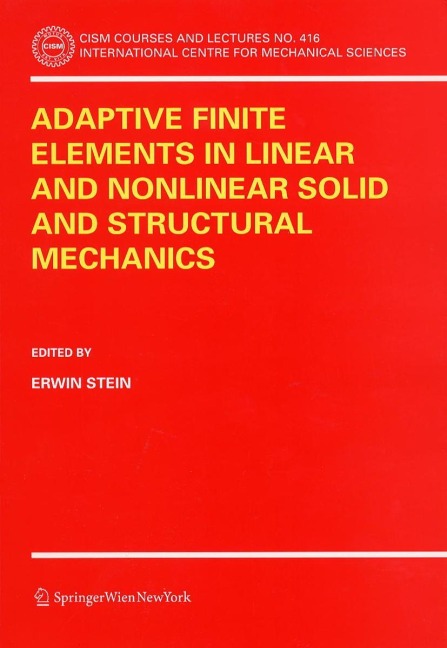
Adaptive Finite Elements in Linear and Nonlinear Solid and Structural Mechanics -
-40% koodiga BOOKS
Saadetis 12-18 tööpäeva jooksul
30-päevane tagastamisõigus
This course with 6 lecturers intends to present a systematic survey of recent re search results of well-known scientists on error-controlled adaptive finite element methods in solid and structural mechanics with emphasis to problem-dependent concepts for adaptivity, error analysis as well as h- and p-adaptive refinement techniques including meshing and remeshing. Challenging applications are of equal impor ... Täielik kirjeldus
Võib-olla meeldib sulle ka
 TOP
TOP

Determined: The Science of Life Without Free Will
-40% koodiga BOOKS
Meie tarnija laos
TOP

The Light Eaters: How the Unseen World of Plant Intelligence Offers a New Understanding of Life on Earth
-40% koodiga BOOKS
Meie tarnija laos
 TOP
TOP
Why We Sleep: Unlocking the Power of Sleep and Dreams
-40% koodiga BOOKS
Laos
TOP
The Rise and Fall of the Dinosaurs: A New History of a Lost World
-40% koodiga BOOKS
Meie tarnija laos
TOP

Biology: A Global Approach, Global Edition
Neil Campbell, Rebecca Orr, Lisa Urry, Peter Minorsky, Michael Cain, Jane Reece, Steven Wasserman
-40% koodiga BOOKS
Meie tarnija laos
TOP

Six Not-so-easy Pieces: Einstein's Relativity, Symmetry, and Space-Time
Richard P. Feynman, Robert B. Leighton, Matthew Sands
-40% koodiga BOOKS
Meie tarnija laos
TOP


The Age of Alchemy: How Early Innovators Shaped Modern Chemistry
-40% koodiga BOOKS
Meie tarnija laos
TOP
The Secrets of our DNA: How Genetics has Changed the World
-40% koodiga BOOKS
Meie tarnija laos
TOP

Janeway's Immunobiology
Leslie J. Berg, Kenneth Murphy, Casey Weaver
-40% koodiga BOOKS
Meie tarnija laos
TOP

How to Solve it: A New Aspect of Mathematical Method
-40% koodiga BOOKS
Meie tarnija laos
TOP
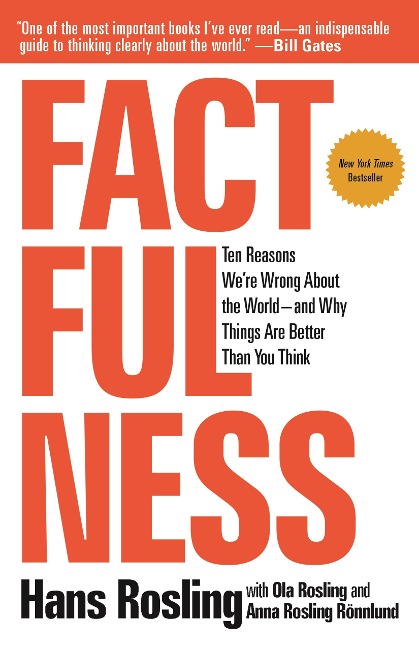
Factfulness: Ten Reasons We're Wrong About the World--and Why Things Are Better Than You Think
Ola Rosling, Anna Rosling Rönnlund, Hans Rosling
-40% koodiga BOOKS
Meie tarnija laos
TOP
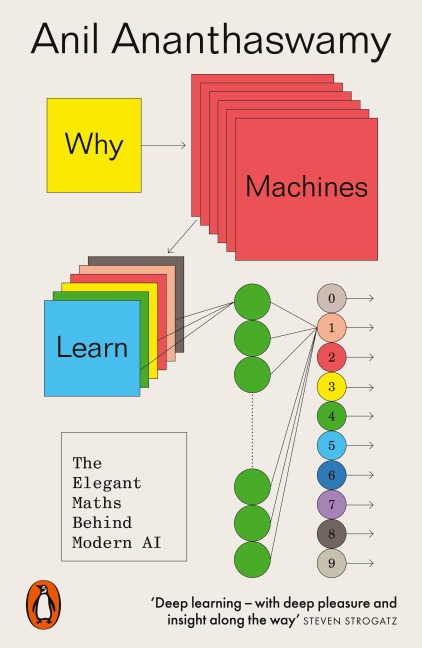
Why Machines Learn: The Elegant Maths Behind Modern AI
-40% koodiga BOOKS
Meie tarnija laos
TOP

The Feynman Lectures on Physics. The New Millennium Edition
Matthew Sands, Robert Leighton, Richard Feynman
-40% koodiga BOOKS
Meie tarnija laos
 TOP
TOP

Entangled Life: How Fungi Make Our Worlds, Change Our Minds and Shape Our Futures
-40% koodiga BOOKS
Meie tarnija laos
TOP

Life As No One Knows It: The Physics of Life's Emergence
-40% koodiga BOOKS
Meie tarnija laos
TOP
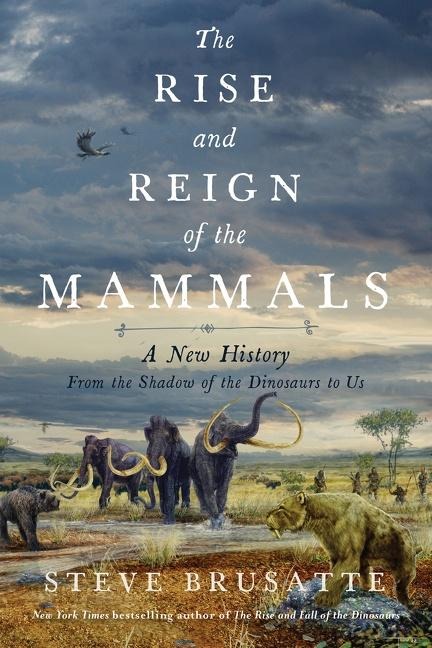
The Rise and Reign of the Mammals: A New History, from the Shadow of the Dinosaurs to Us
-40% koodiga BOOKS
Meie tarnija laos
TOP
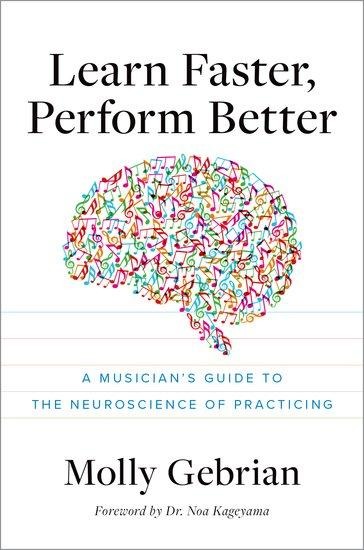
Learn Faster, Perform Better: A Musician's Guide to the Neuroscience of Practicing
-40% koodiga BOOKS
Meie tarnija laos
TOP

The Road to Reality: A Complete Guide to the Laws of the Universe
-40% koodiga BOOKS
Meie tarnija laos
Kirjeldus
This course with 6 lecturers intends to present a systematic survey of recent re search results of well-known scientists on error-controlled adaptive finite element methods in solid and structural mechanics with emphasis to problem-dependent concepts for adaptivity, error analysis as well as h- and p-adaptive refinement techniques including meshing and remeshing. Challenging applications are of equal importance, including elastic and elastoplastic deformations of solids, con tact problems and thin-walled structures. Some major topics should be pointed out, namely: (i) The growing importance of goal-oriented and local error estimates for quan tities of interest¿in comparison with global error estimates¿based on dual finite element solutions; (a) The importance of the p-version of the finite element method in conjunction with parameter-dependent hierarchical approximations of the mathematical model, for example in boundary layers of elastic plates; (Hi) The choice of problem-oriented error measures in suitable norms, consider ing residual, averaging and hierarchical error estimates in conjunction with the efficiency of the associated adaptive computations; (iv) The importance of implicit local postprocessing with enhanced test spaces in order to get constant-free, i. e. absolute-not only relative-discretizati- error estimates; (v) The coupling of error-controlled adaptive discretizations and the mathemat ical modeling in related subdomains, such as boundary layers. The main goals of adaptivity are reliability and efficiency, combined with in sight and access to controls which are independent of the applied discretization methods. By these efforts, new paradigms in Computational Mechanics should be realized, namely verifications and even validations ofengineering models.
Lisateave
| Kirjastaja | Springer Vienna |
|---|---|
| Series | CISM International Centre for Mechanical Sciences |
| Väljalaskeaasta | 2005 |
| Kaanetüüp | Pehme kaanega |
| EAN | 9783211269756 |