
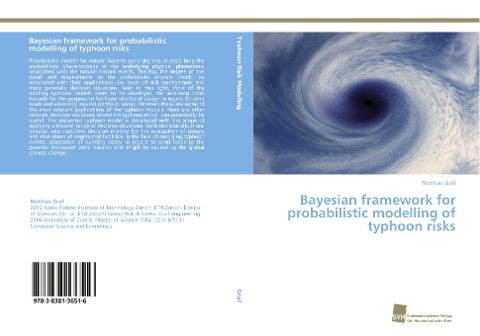
Bayesian framework for probabilistic modelling of typhoon risks - Mathias Graf
-40% koodiga BOOKS
Saadetis 12-18 tööpäeva jooksul
30-päevane tagastamisõigus
Probabilistic models for natural hazards generally aim at describing the probabilistic characteristics of the underlying physical phenomena associated with the natural hazard events. Thereby, the degree of the detail and requirements to the probabilistic models should be associated with their applications, i.e. types of risk management and more generally decision situations. Seen in this light, most of the ... Täielik kirjeldus
Võib-olla meeldib sulle ka
 TOP
TOP

Determined: The Science of Life Without Free Will
-40% koodiga BOOKS
Meie tarnija laos
 TOP
TOP
The Rise and Fall of the Dinosaurs: A New History of a Lost World
-40% koodiga BOOKS
Meie tarnija laos
TOP

Factfulness: Ten Reasons We're Wrong About the World--and Why Things Are Better Than You Think
Ola Rosling, Anna Rosling Rönnlund, Hans Rosling
-40% koodiga BOOKS
Meie tarnija laos
TOP

Biology: A Global Approach, Global Edition
Neil Campbell, Rebecca Orr, Lisa Urry, Peter Minorsky, Michael Cain, Jane Reece, Steven Wasserman
-40% koodiga BOOKS
Meie tarnija laos
TOP

Six Not-so-easy Pieces: Einstein's Relativity, Symmetry, and Space-Time
Richard P. Feynman, Robert B. Leighton, Matthew Sands
-40% koodiga BOOKS
Meie tarnija laos
TOP

Entangled Life: How Fungi Make Our Worlds, Change Our Minds and Shape Our Futures
-40% koodiga BOOKS
Meie tarnija laos
TOP

The Light Eaters: How the Unseen World of Plant Intelligence Offers a New Understanding of Life on Earth
-40% koodiga BOOKS
Meie tarnija laos
TOP


The Age of Alchemy: How Early Innovators Shaped Modern Chemistry
-40% koodiga BOOKS
Meie tarnija laos
TOP

The Secrets of our DNA: How Genetics has Changed the World
-40% koodiga BOOKS
Meie tarnija laos
TOP

Janeway's Immunobiology
Leslie J. Berg, Kenneth Murphy, Casey Weaver
-40% koodiga BOOKS
Meie tarnija laos
TOP

Behave: The Biology of Humans at Our Best and Worst
-40% koodiga BOOKS
Meie tarnija laos
TOP

Why We Sleep: Unlocking the Power of Sleep and Dreams
-40% koodiga BOOKS
Laos
TOP
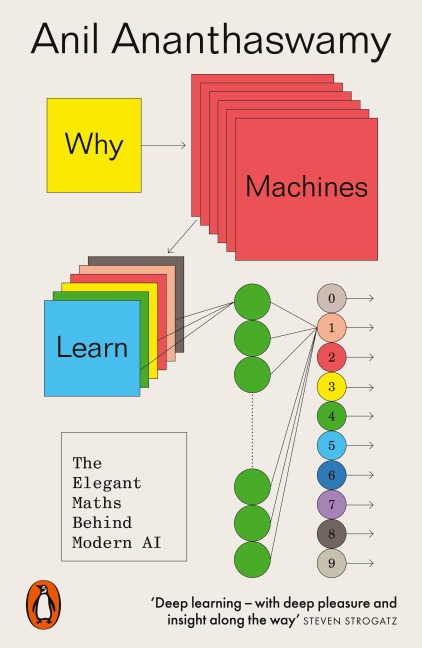
Why Machines Learn: The Elegant Maths Behind Modern AI
-40% koodiga BOOKS
Meie tarnija laos
TOP

Life As No One Knows It: The Physics of Life's Emergence
-40% koodiga BOOKS
Meie tarnija laos
TOP
The Rise and Reign of the Mammals: A New History, from the Shadow of the Dinosaurs to Us
-40% koodiga BOOKS
Meie tarnija laos
TOP

Learn Faster, Perform Better: A Musician's Guide to the Neuroscience of Practicing
-40% koodiga BOOKS
Meie tarnija laos
TOP
The Brain That Changes Itself: Stories of Personal Triumph from the Frontiers of Brain Science
-40% koodiga BOOKS
Meie tarnija laos
 TOP
TOP

How to Solve it: A New Aspect of Mathematical Method
-40% koodiga BOOKS
Meie tarnija laos
Kirjeldus
Probabilistic models for natural hazards generally aim at describing the probabilistic characteristics of the underlying physical phenomena associated with the natural hazard events. Thereby, the degree of the detail and requirements to the probabilistic models should be associated with their applications, i.e. types of risk management and more generally decision situations. Seen in this light, most of the existing typhoon models seem to be developed for assessing wind hazards for the purpose to facilitate structural design in regard to wind loads and assessing insured portfolio losses. Whereas these are some of the most relevant applications of the typhoon models, there are other relevant decision situations where the typhoon model can potentially be useful. The presented typhoon model is developed with the scope of applying a broader range of decision situations. Such decision situations include: near-real-time decision making for the evacuation of people and shut-down of engineered facilities in the face of emerging typhoon events; adaptation of building codes in regard to wind loads to the possible increaseof wind hazards that might be caused by the global climate change.
Lisateave
| Autor | Mathias Graf |
|---|---|
| Kirjastaja | Südwestdeutscher Verlag für Hochschulschriften |
| Väljalaskeaasta | 2013 |
| Kaanetüüp | Pehme kaanega |
| EAN | 9783838136516 |