
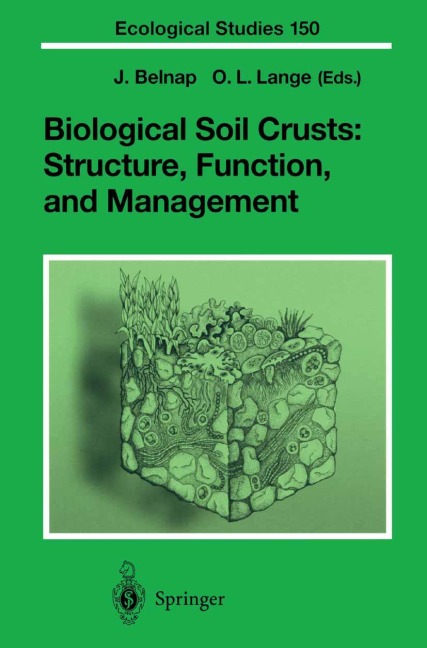
Biological Soil Crusts: Structure, Function, and Management -
-40% koodiga BOOKS
Saadetis 12-18 tööpäeva jooksul
30-päevane tagastamisõigus
In arid and semiarid lands throughout the world, where the cover of vegetation is sparse or absent,the open spaces between the higher plants are generally not bare of autotrophic life,but covered by a community of highly specialized organisms. This soil-surface community consists of cyanob- teria, algae, lichens, mosses, microfungi, and other bacteria in differing proportions. Cyanobacterial and microfungal ... Täielik kirjeldus
Võib-olla meeldib sulle ka
 TOP
TOP

Determined: The Science of Life Without Free Will
-40% koodiga BOOKS
Meie tarnija laos
TOP
The Light Eaters: How the Unseen World of Plant Intelligence Offers a New Understanding of Life on Earth
-40% koodiga BOOKS
Meie tarnija laos
 TOP
TOP
Why We Sleep: Unlocking the Power of Sleep and Dreams
-40% koodiga BOOKS
Laos
TOP
The Rise and Fall of the Dinosaurs: A New History of a Lost World
-40% koodiga BOOKS
Meie tarnija laos
TOP
Biology: A Global Approach, Global Edition
Neil Campbell, Rebecca Orr, Lisa Urry, Peter Minorsky, Michael Cain, Jane Reece, Steven Wasserman
-40% koodiga BOOKS
Meie tarnija laos
TOP

Six Not-so-easy Pieces: Einstein's Relativity, Symmetry, and Space-Time
Richard P. Feynman, Robert B. Leighton, Matthew Sands
-40% koodiga BOOKS
Meie tarnija laos
TOP
Explaining AuDHD: The expert-led guide to Autism and ADHD Co-concurrence
-40% koodiga BOOKS
Meie tarnija laos
TOP

The Age of Alchemy: How Early Innovators Shaped Modern Chemistry
-40% koodiga BOOKS
Meie tarnija laos
TOP
The Secrets of our DNA: How Genetics has Changed the World
-40% koodiga BOOKS
Meie tarnija laos
TOP

How to Solve it: A New Aspect of Mathematical Method
-40% koodiga BOOKS
Meie tarnija laos
TOP
Factfulness: Ten Reasons We're Wrong About the World--and Why Things Are Better Than You Think
Ola Rosling, Anna Rosling Rönnlund, Hans Rosling
-40% koodiga BOOKS
Meie tarnija laos
TOP
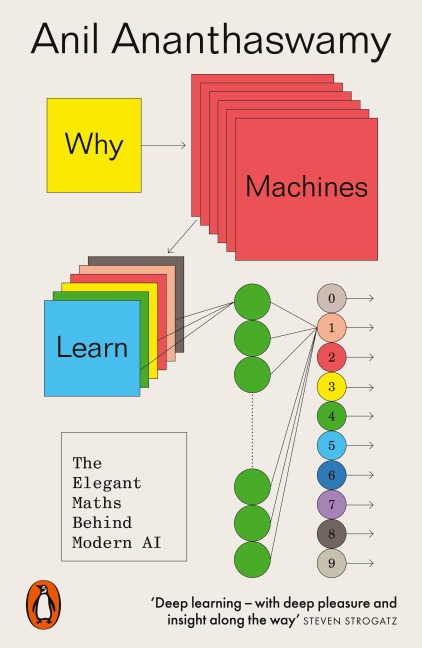
Why Machines Learn: The Elegant Maths Behind Modern AI
-40% koodiga BOOKS
Meie tarnija laos
TOP

The Feynman Lectures on Physics. The New Millennium Edition
Matthew Sands, Robert Leighton, Richard Feynman
-40% koodiga BOOKS
Meie tarnija laos
 TOP
TOP
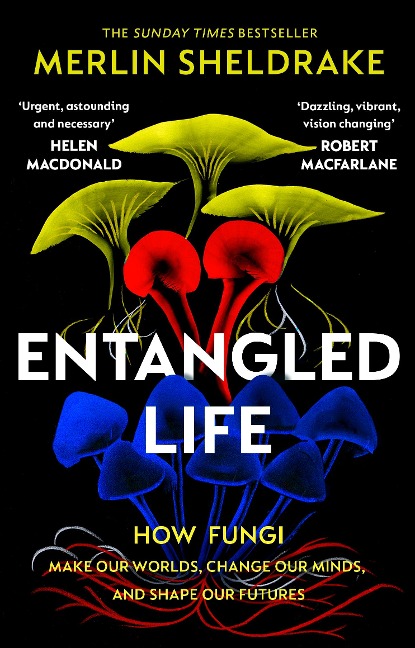
Entangled Life: How Fungi Make Our Worlds, Change Our Minds and Shape Our Futures
-40% koodiga BOOKS
Meie tarnija laos
TOP

Life As No One Knows It: The Physics of Life's Emergence
-40% koodiga BOOKS
Meie tarnija laos
TOP
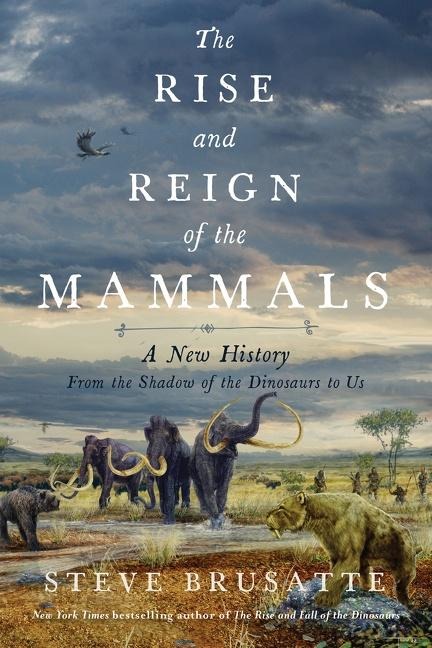
The Rise and Reign of the Mammals: A New History, from the Shadow of the Dinosaurs to Us
-40% koodiga BOOKS
Meie tarnija laos
TOP
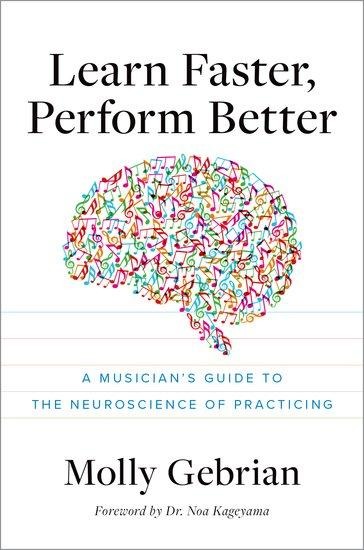
Learn Faster, Perform Better: A Musician's Guide to the Neuroscience of Practicing
-40% koodiga BOOKS
Meie tarnija laos
TOP

Janeway's Immunobiology
Leslie J. Berg, Kenneth Murphy, Casey Weaver
-40% koodiga BOOKS
Meie tarnija laos
Kirjeldus
In arid and semiarid lands throughout the world, where the cover of vegetation is sparse or absent,the open spaces between the higher plants are generally not bare of autotrophic life,but covered by a community of highly specialized organisms. This soil-surface community consists of cyanob- teria, algae, lichens, mosses, microfungi, and other bacteria in differing proportions. Cyanobacterial and microfungal filaments, rhizinae and rhi- morphs of lichens, and the rhizinae and protonemata of bryophytes weave throughout the top few millimeters of soil,gluing loose soil particles together. This forms a crust up to a few centimeters thick that stabilizes and protects soil surfaces from erosive forces (Cameron and Blank 1966; Friedmann and Galun 1974; Belnap and Gardner 1993).These crusts occur in all hot,cool,and cold-arid and semiarid regions of the world,and may constitute up to or more than 70% of the living cover. Biological soil crusts have only recently been recognized as having a major influence on terrestrial ecosystems.
Lisateave
| Kirjastaja | Springer Berlin Heidelberg |
|---|---|
| Series | Ecological Studies |
| Väljalaskeaasta | 2002 |
| Kaanetüüp | Pehme kaanega |
| EAN | 9783540437574 |