
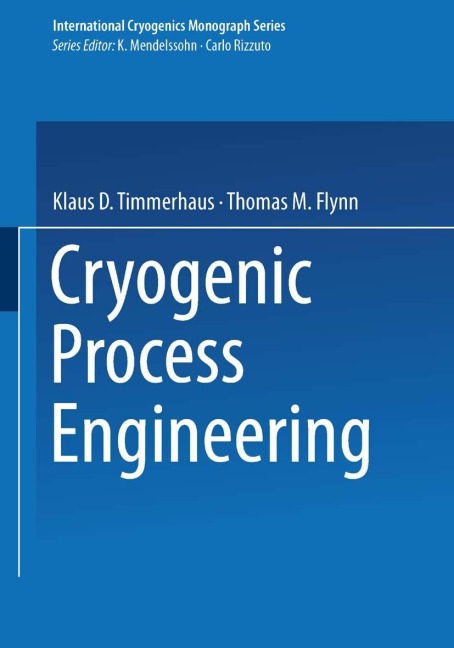
Cryogenic Process Engineering - Thomas M. Flynn,Klaus D. Timmerhaus
-25% koodiga BOOKS
Saadetis 12-18 tööpäeva jooksul
30-päevane tagastamisõigus
Cryogenics, a term commonly used to refer to very low temperatures, had its beginning in the latter half of the last century when man learned, for the first time, how to cool objects to a temperature lower than had ever existed na tu rally on the face of the earth. The air we breathe was first liquefied in 1883 by a Polish scientist named Olszewski. Ten years later he and a British scientist, Sir James Dewa ... Täielik kirjeldus
Võib-olla meeldib sulle ka
 TOP
TOP

Six Not-so-easy Pieces: Einstein's Relativity, Symmetry, and Space-Time
Richard P. Feynman, Robert B. Leighton, Matthew Sands
-25% koodiga BOOKS
Meie tarnija laos
TOP

Six Easy Pieces: Essentials of Physics Explained by Its Most Brilliant Teacher
Richard P. Feynman, Robert B. Leighton, Matthew Sands
-25% koodiga BOOKS
Meie tarnija laos
TOP

Behave: The Biology of Humans at Our Best and Worst
-25% koodiga BOOKS
Meie tarnija laos
TOP

Determined: The Science of Life Without Free Will
-25% koodiga BOOKS
Meie tarnija laos
 TOP
TOP


Beyond Inheritance: Our Ever-Mutating Cells and a New Understanding of Health
-25% koodiga BOOKS
Meie tarnija laos
TOP

The Age of Alchemy: How Early Innovators Shaped Modern Chemistry
-25% koodiga BOOKS
Meie tarnija laos
TOP

The Secrets of our DNA: How Genetics has Changed the World
-25% koodiga BOOKS
Meie tarnija laos
TOP

Why We Sleep: Unlocking the Power of Sleep and Dreams
-25% koodiga BOOKS
Laos
TOP

Biology: A Global Approach, Global Edition
Neil Campbell, Rebecca Orr, Lisa Urry, Peter Minorsky, Michael Cain, Jane Reece, Steven Wasserman
-25% koodiga BOOKS
Meie tarnija laos
TOP

Why Machines Learn: The Elegant Maths Behind Modern AI
-25% koodiga BOOKS
Meie tarnija laos
TOP

A Short History of Nearly Everything 2.0
-25% koodiga BOOKS
Meie tarnija laos
TOP

Astrophysics for People in a Hurry: Essays on the Universe and Our Place Within It
-25% koodiga BOOKS
Meie tarnija laos
TOP
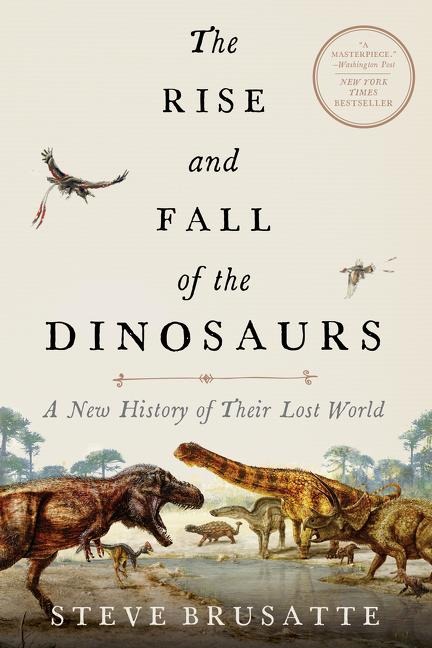
The Rise and Fall of the Dinosaurs: A New History of a Lost World
-25% koodiga BOOKS
Meie tarnija laos
TOP
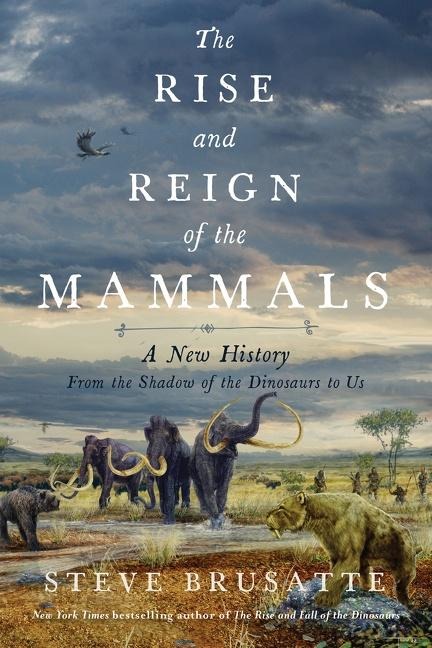
The Rise and Reign of the Mammals: A New History, from the Shadow of the Dinosaurs to Us
-25% koodiga BOOKS
Meie tarnija laos
TOP

Learn Faster, Perform Better: A Musician's Guide to the Neuroscience of Practicing
-25% koodiga BOOKS
Meie tarnija laos
TOP

A Brief History of Time: From the Big Bang to Black Holes
-25% koodiga BOOKS
Meie tarnija laos
 TOP
TOP

Thing Explainer: Complicated Stuff in Simple Words
-25% koodiga BOOKS
Meie tarnija laos
TOP

Introduction to Quantum Mechanics
Darrell F. Schroeter, David J. Griffiths
-25% koodiga BOOKS
Meie tarnija laos
Kirjeldus
Cryogenics, a term commonly used to refer to very low temperatures, had its beginning in the latter half of the last century when man learned, for the first time, how to cool objects to a temperature lower than had ever existed na tu rally on the face of the earth. The air we breathe was first liquefied in 1883 by a Polish scientist named Olszewski. Ten years later he and a British scientist, Sir James Dewar, liquefied hydrogen. Helium, the last of the so-caBed permanent gases, was finally liquefied by the Dutch physicist Kamerlingh Onnes in 1908. Thus, by the beginning of the twentieth century the door had been opened to astrange new world of experimentation in which aB substances, except liquid helium, are solids and where the absolute temperature is only a few microdegrees away. However, the point on the temperature scale at which refrigeration in the ordinary sense of the term ends and cryogenics begins has ne ver been weB defined. Most workers in the field have chosen to restrict cryogenics to a tem perature range below -150°C (123 K). This is a reasonable dividing line since the normal boiling points of the more permanent gases, such as helium, hydrogen, neon, nitrogen, oxygen, and air, lie below this temperature, while the more common refrigerants have boiling points that are above this temperature. Cryogenic engineering is concerned with the design and development of low-temperature systems and components.
Lisateave
| Autor | Thomas M. Flynn, Klaus D. Timmerhaus |
|---|---|
| Kirjastaja | Springer New York |
| Series | International Cryogenics Monograph Series |
| Väljalaskeaasta | 2013 |
| Kaanetüüp | Pehme kaanega |
| EAN | 9781468487589 |