
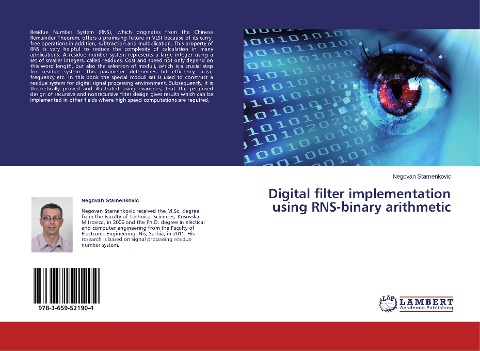
Digital filter implementation using RNS-binary arithmetic - Negovan Stamenkovic
-25% koodiga BOOKS
Saadetis 10-16 tööpäeva jooksul
30-päevane tagastamisõigus
Residue Number System (RNS), which originates from the Chinese Remainder Theorem, offers a promising future in VLSI because of its carry-free operations in addition, subtraction and multiplication. This property of RNS is very helpful to reduce the complexity of calculation in many applications. A residue number system represents a large integer using a set of smaller integers, called residues. Cost and spe ... Täielik kirjeldus
Võib-olla meeldib sulle ka
 TOP
TOP

Born a Crime: Stories from a South African Childhood
-25% koodiga BOOKS
Laos
TOP


Little Book of Cartier: The story of the iconic jewellery brand
-25% koodiga BOOKS
Meie tarnija laos

 TOP
TOP

Amusing Ourselves to Death: Public Discourse in the Age of Show Business
-25% koodiga BOOKS
Meie tarnija laos

 TOP
TOP
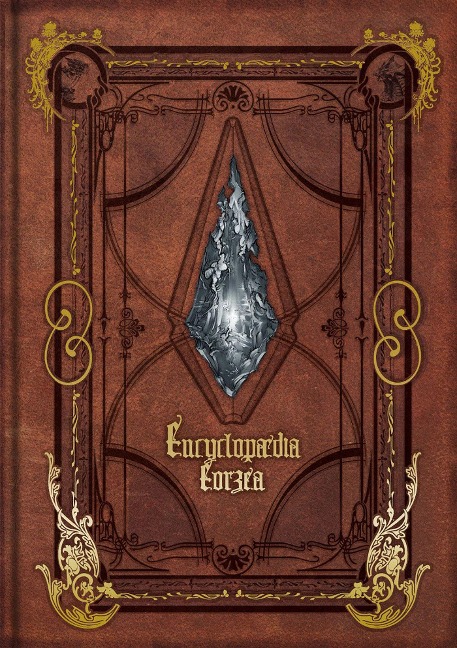
Encyclopaedia Eorzea ~The World of Final Fantasy XIV~ Volume I
-25% koodiga BOOKS
Meie tarnija laos
TOP
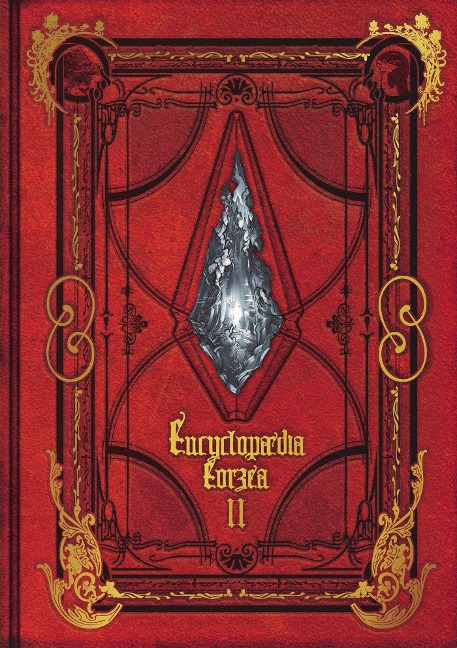
Encyclopaedia Eorzea ~The World of Final Fantasy XIV~ Volume II
-25% koodiga BOOKS
Meie tarnija laos
TOP

The Art of Home: A Designer Guide to Creating an Elevated Yet Approachable Home
-25% koodiga BOOKS
Meie tarnija laos

 TOP
TOP

A Screaming Life: Into the Superunknown with Soundgarden and Beyond
-25% koodiga BOOKS
Lõppenud
TOP

Fashionpedia: The Visual Dictionary of Fashion Design
-25% koodiga BOOKS
Meie tarnija laos
TOP
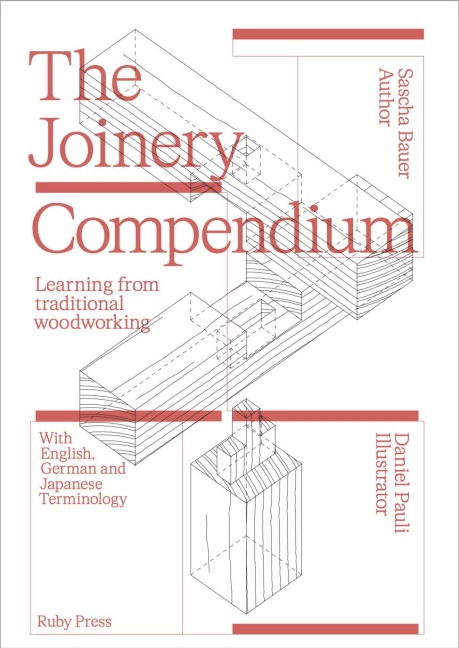
The Joinery Compendium: Learning from Traditional Woodworking
-25% koodiga BOOKS
Meie tarnija laos
 TOP
TOP

Architecture Against Architecture: A Manifesto
-25% koodiga BOOKS
Meie tarnija laos
TOP

The Last of Us: Part I and Part II Scripts
-25% koodiga BOOKS
Meie tarnija laos
TOP

Lorena B - Top Model of MetArt.com: Deutsch/Englische Originalausgabe - Original English-German Edition
-25% koodiga BOOKS
Meie tarnija laos

Kirjeldus
Residue Number System (RNS), which originates from the Chinese Remainder Theorem, offers a promising future in VLSI because of its carry-free operations in addition, subtraction and multiplication. This property of RNS is very helpful to reduce the complexity of calculation in many applications. A residue number system represents a large integer using a set of smaller integers, called residues. Cost and speed not only depend on this word length, but also the selection of moduli, which is a crucial step for residue system. This parameter determines bit efficiency, area, frequency etc. In this book the special moduli set is used to construct a residue system for digital signal processing environment. Subsequently, it is theoretically proved and illustrated using examples, that the proposed design of recursive and nonrecursive filter design gives results which can be implemented in other fields where high speed computations are required.
Lisateave
| Autor | Negovan Stamenkovic |
|---|---|
| Kirjastaja | LAP LAMBERT Academic Publishing |
| Väljalaskeaasta | 2014 |
| Kaanetüüp | Pehme kaanega |
| EAN | 9783659521904 |