
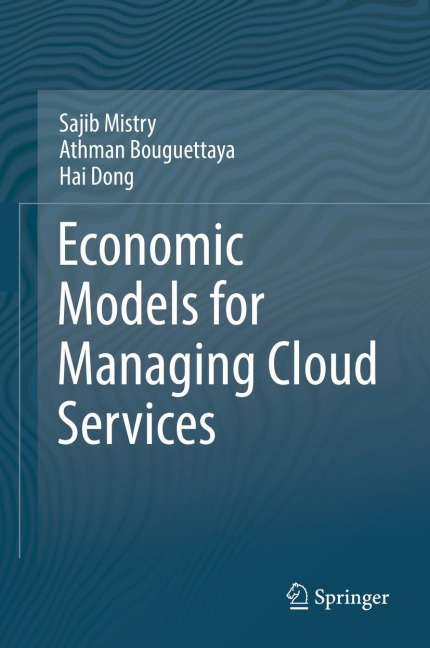
Economic Models for Managing Cloud Services - Athman Bouguettaya,Sajib Mistry,Hai Dong
-40% koodiga BOOKS
Saadetis 17-23 tööpäeva jooksul
30-päevane tagastamisõigus
The authors introduce both the quantitative and qualitative economic models as optimization tools for the selection of long-term cloud service requests. The economic models fit almost intuitively in the way business is usually done and maximize the profit of a cloud provider for a long-term period. The authors propose a new multivariate Hidden Markov and Autoregressive Integrated Moving Average (HMM-ARIMA) ... Täielik kirjeldus
Võib-olla meeldib sulle ka

 TOP
TOP

Unreasonable Hospitality: The Remarkable Power of Giving People More Than They Expect
-40% koodiga BOOKS
Meie tarnija laos
 TOP
TOP

Never Split the Difference: Negotiating as if Your Life Depended on It
-40% koodiga BOOKS
Laos
TOP
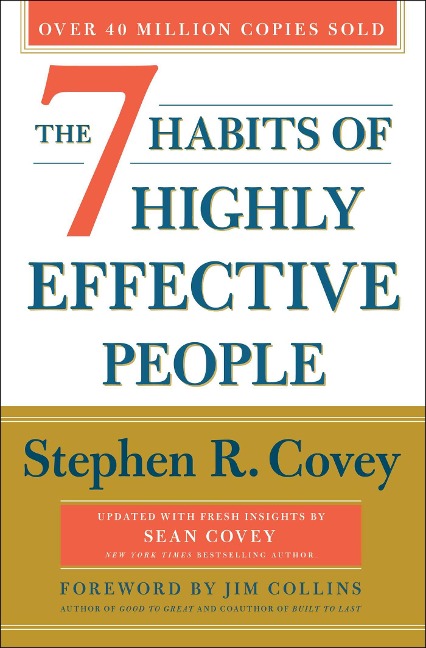
The 7 Habits of Highly Effective People. 30th Anniversary Edition: Powerful Lessons in Personal Change
Jim Collins, Sean Covey, Stephen R. Covey
-40% koodiga BOOKS
Laos
TOP

Atomic Habits: An Easy & Proven Way to Build Good Habits & Break Bad Ones
-40% koodiga BOOKS
Meie tarnija laos
TOP
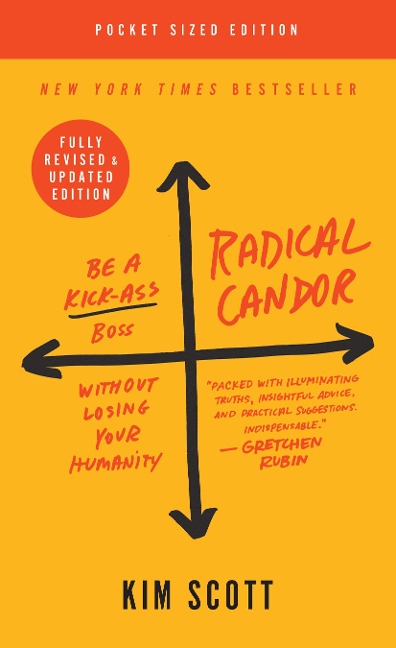
Radical Candor: Be a Kick-Ass Boss Without Losing Your Humanity
-40% koodiga BOOKS
Meie tarnija laos
TOP
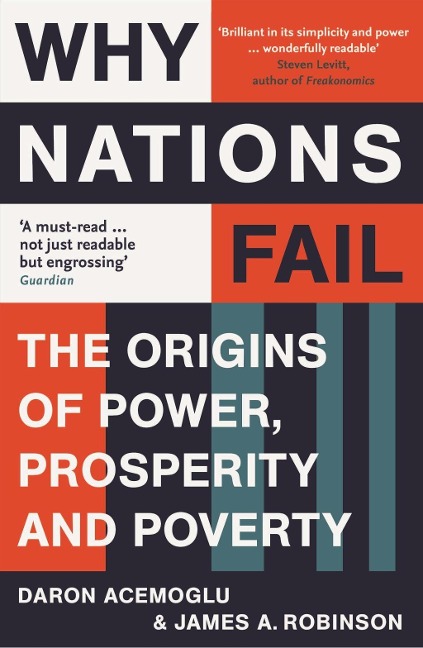
Why Nations Fail: The Origins of Power, Prosperity and Poverty
Daron Acemoglu, James A. Robinson
-40% koodiga BOOKS
Meie tarnija laos
TOP

Legacy: What The All Blacks Can Teach Us About The Business Of Life
-40% koodiga BOOKS
Meie tarnija laos
TOP

The Psychology of Money: Timeless Lessons on Wealth, Greed, and Happiness
-40% koodiga BOOKS
Laos
TOP
Clear Thinking: The Art and Science of Making Better Decisions
-40% koodiga BOOKS
Meie tarnija laos
TOP

Vienna: How the City of Ideas Created the Modern World
-40% koodiga BOOKS
Meie tarnija laos
 TOP
TOP

The Infinity Machine: Demis Hassabis, DeepMind, and the Quest for Superintelligence
-40% koodiga BOOKS
Meie tarnija laos
TOP

1873: The Rothschilds, the First Great Depression, and the Making of the Modern World
-40% koodiga BOOKS
Meie tarnija laos
TOP
The Lean Startup: How Today's Entrepreneurs Use Continuous Innovation to Create Radically Successful Businesses
-40% koodiga BOOKS
Laos
TOP
Radical Candor: Be a Kick-Ass Boss Without Losing Your Humanity
-40% koodiga BOOKS
Meie tarnija laos
TOP
Influence: The Psychology of Persuasion
-40% koodiga BOOKS
Meie tarnija laos
TOP

Co-Intelligence: Living and Working with AI
-40% koodiga BOOKS
Meie tarnija laos
TOP
The First 90 Days: Proven Straegies for Getting up to Speed faster and smarter
-40% koodiga BOOKS
Meie tarnija laos
Kirjeldus
The authors introduce both the quantitative and qualitative economic models as optimization tools for the selection of long-term cloud service requests. The economic models fit almost intuitively in the way business is usually done and maximize the profit of a cloud provider for a long-term period. The authors propose a new multivariate Hidden Markov and Autoregressive Integrated Moving Average (HMM-ARIMA) model to predict various patterns of runtime resource utilization. A heuristic-based Integer Linear Programming (ILP) optimization approach is developed to maximize the runtime resource utilization. It deploys a Dynamic Bayesian Network (DBN) to model the dynamic pricing and long-term operating cost. A new Hybrid Adaptive Genetic Algorithm (HAGA) is proposed that optimizes a non-linear profit function periodically to address the stochastic arrival of requests. Next, the authors explore the Temporal Conditional Preference Network (TempCP-Net) as the qualitative economic model to represent the high-level IaaS business strategies. The temporal qualitative preferences are indexed in a multidimensional k-d tree to efficiently compute the preference ranking at runtime. A three-dimensional Q-learning approach is developed to find an optimal qualitative composition using statistical analysis on historical request patterns. Finally, the authors propose a new multivariate approach to predict future Quality of Service (QoS) performances of peer service providers to efficiently configure a TempCP-Net. It discusses the experimental results and evaluates the efficiency of the proposed composition framework using Google Cluster data, real-world QoS data, and synthetic data. It also explores the significance of the proposed approach in creating an economically viable and stable cloud market. This book can be utilized as a useful reference to anyone who is interested in theory, practice, and application of economic models in cloud computing. This book will be an invaluable guide for small and medium entrepreneurs who have invested or plan to invest in cloud infrastructures and services. Overall, this book is suitable for a wide audience that includes students, researchers, and practitioners studying or working in service-oriented computing and cloud computing.
Lisateave
| Autor | Athman Bouguettaya, Sajib Mistry, Hai Dong |
|---|---|
| Kirjastaja | Springer Nature Switzerland |
| Väljalaskeaasta | 2018 |
| Kaanetüüp | Kõvakaaneline |
| EAN | 9783319738758 |