
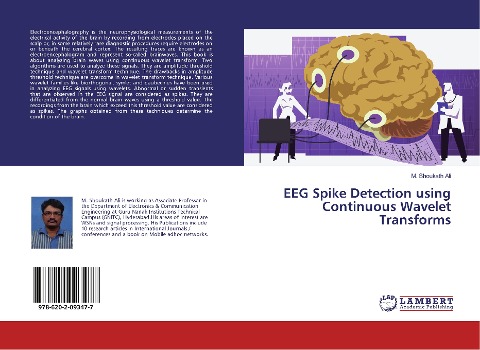
EEG Spike Detection using Continuous Wavelet Transforms - M. Shoukath Ali
-40% koodiga BOOKS
Saadetis 12-18 tööpäeva jooksul
30-päevane tagastamisõigus
Electroencephalography is the neurophysiological measurements of the electrical activity of the brain by recording from electrodes placed on the scalp or, in some relatively rare diagnostic procedures require electrodes on or beneath the cerebral cortex. The resulting traces are known as an electroencephalogram and represent so-called brainwaves. This book is about analyzing brain waves using continuous wav ... Täielik kirjeldus
Võib-olla meeldib sulle ka

 TOP
TOP

If Anyone Builds It, Everyone Dies: The Case Against Superintelligent AI
Eliezer Yudkowsky, Nate Soares
-40% koodiga BOOKS
Meie tarnija laos
 TOP
TOP
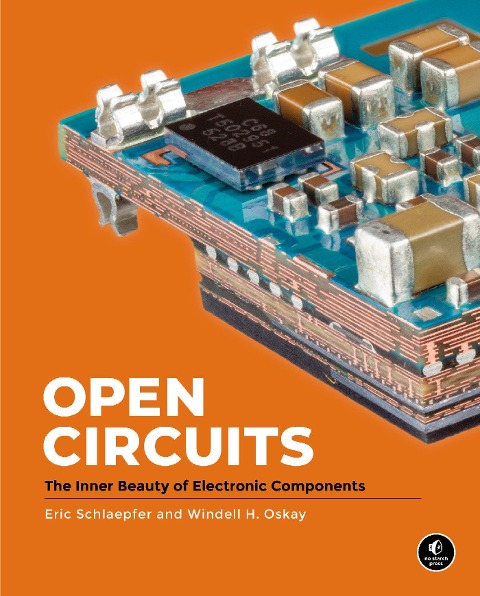
Open Circuits: The Inner Beauty of Electronic Components
Eric Schlaepfer, Windell Oskay
-40% koodiga BOOKS
Meie tarnija laos
TOP
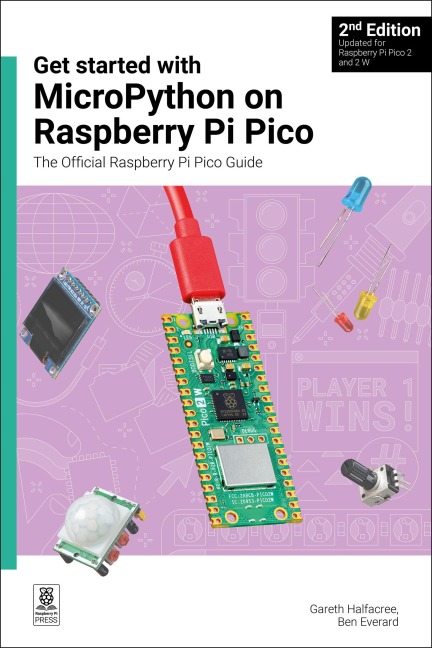
Get started with MicroPython on Raspberry Pi Pico: The Official Raspberry Pi Pico Guide
-40% koodiga BOOKS
Meie tarnija laos
TOP

Nucleo Boards Programming with the STM32CubeIDE: Hands-on in more than 50 projects
-40% koodiga BOOKS
Meie tarnija laos
 TOP
TOP

Data-Driven Science and Engineering: Machine Learning, Dynamical Systems, and Control
Steven L. Brunton, J. Nathan Kutz
-40% koodiga BOOKS
Meie tarnija laos
TOP

Fundamentals of Aerodynamics ISE
Christopher Cadou, John D. Anderson
-40% koodiga BOOKS
Meie tarnija laos
TOP
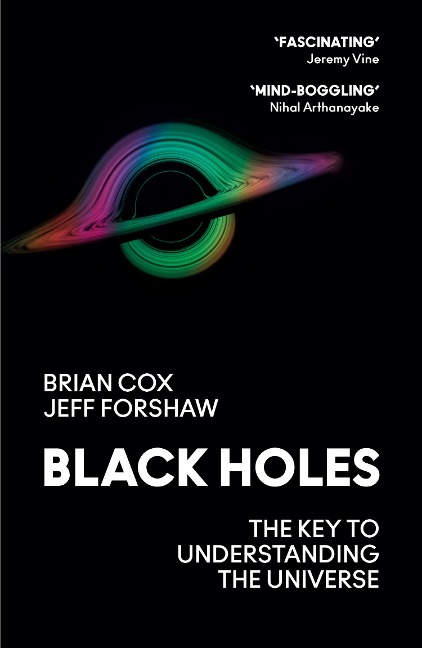
Black Holes: The Key to Understanding the Universe
-40% koodiga BOOKS
Meie tarnija laos
TOP

KiCad Like A Pro - Fundamentals and Projects: Getting started with the world's best open-source PCB tool
-40% koodiga BOOKS
Meie tarnija laos
TOP

Foundations of Flavor: The Noma Guide to Fermentation: Including Step-By-Step Information on Making and Cooking with: Koji, Kombuchas, Shoyus, Misos, Vinegars, Garums, Lacto-Ferments and black Fruits Vegetables
-40% koodiga BOOKS
Meie tarnija laos
TOP
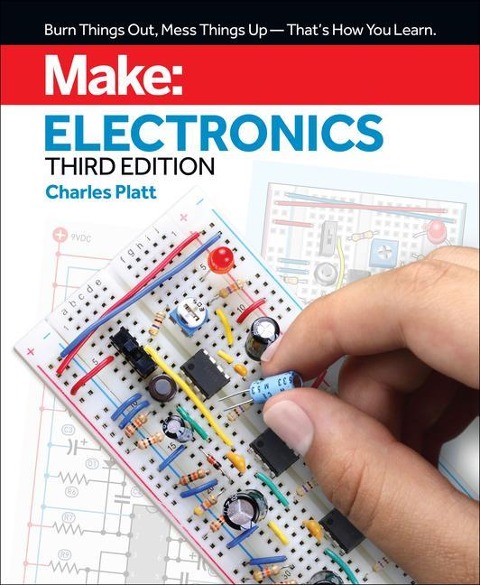
Make: Electronics: Learning by Discovery: A hands-on primer for the new electronics enthusiast
-40% koodiga BOOKS
Meie tarnija laos
TOP

The Idea Factory: Bell Labs and the Great Age of American Innovation
-40% koodiga BOOKS
Meie tarnija laos
TOP

Flowers For Algernon: A Modern Literary Classic
-40% koodiga BOOKS
Meie tarnija laos
TOP


Professional SMD Assembly: Practical Low-Cost Methods for Reliable PCB Production
-40% koodiga BOOKS
Meie tarnija laos
TOP

Blood in the Machine: The Origins of the Rebellion Against Big Tech
-40% koodiga BOOKS
Meie tarnija laos
TOP

Mastering the Arduino Uno R4: Programming and Projects for the Minima and WiFi
-40% koodiga BOOKS
Meie tarnija laos
TOP

Learning the Art of Electronics: A Hands-On Lab Course
Thomas C. Hayes, Paul Horowitz, David Abrams
-40% koodiga BOOKS
Meie tarnija laos

Kirjeldus
Electroencephalography is the neurophysiological measurements of the electrical activity of the brain by recording from electrodes placed on the scalp or, in some relatively rare diagnostic procedures require electrodes on or beneath the cerebral cortex. The resulting traces are known as an electroencephalogram and represent so-called brainwaves. This book is about analyzing brain waves using continuous wavelet transform. Two algorithms are used to analyze these signals. They are amplitude threshold technique and wavelet transform technique. The drawbacks in amplitude threshold technique are overcome in wavelet transform technique. Various wavelet families like biorthogonal, symlet and daubechies have been used in analyzing EEG signals using wavelets. Abnormal or sudden transients that are observed in the EEG signal are considered as spikes. They are differentiated from the normal brain waves using a threshold value. The recordings from the brain which exceed this threshold value are considered as spikes. The graphs obtained from these techniques determine the condition of the brain.
Lisateave
| Autor | M. Shoukath Ali |
|---|---|
| Kirjastaja | LAP LAMBERT Academic Publishing |
| Väljalaskeaasta | 2017 |
| Kaanetüüp | Pehme kaanega |
| EAN | 9786202093477 |