
International Commodity Policy: A Quantitative Analysis - Hidde P Smit,Kees Burger,Roland Herrmann

-40% koodiga BOOKS
Saadetis 28-34 tööpäeva jooksul
30-päevane tagastamisõigus
For decades, instabilities on world commodity markets have been a central issue in the international policy dialogue. Price stabilization and compensatory financing schemes have been discussed and implemented as instruments to stabilize export earnings of developing countries and to counter the negative consequences of world market instabilities.Originally published in 1993 and reissued in 2023, this book p ... Täielik kirjeldus
Võib-olla meeldib sulle ka

 TOP
TOP

Unreasonable Hospitality: The Remarkable Power of Giving People More Than They Expect
-40% koodiga BOOKS
Meie tarnija laos
 TOP
TOP

Never Split the Difference: Negotiating as if Your Life Depended on It
-40% koodiga BOOKS
Meie tarnija laos
TOP

The 7 Habits of Highly Effective People. 30th Anniversary Edition: Powerful Lessons in Personal Change
Jim Collins, Sean Covey, Stephen R. Covey
-40% koodiga BOOKS
Laos
TOP

Radical Candor: Be a Kick-Ass Boss Without Losing Your Humanity
-40% koodiga BOOKS
Meie tarnija laos
TOP
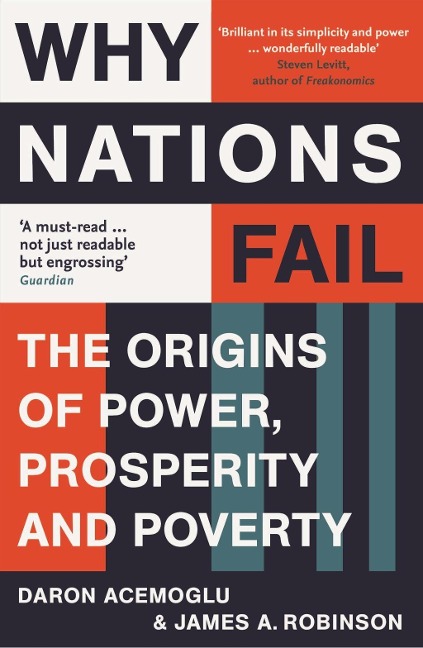
Why Nations Fail: The Origins of Power, Prosperity and Poverty
Daron Acemoglu, James A. Robinson
-40% koodiga BOOKS
Lõppenud
TOP

Legacy: What The All Blacks Can Teach Us About The Business Of Life
-40% koodiga BOOKS
Meie tarnija laos
TOP

Atomic Habits: An Easy & Proven Way to Build Good Habits & Break Bad Ones
-40% koodiga BOOKS
Meie tarnija laos
TOP

Clear Thinking: The Art and Science of Making Better Decisions
-40% koodiga BOOKS
Meie tarnija laos
TOP

Vienna: How the City of Ideas Created the Modern World
-40% koodiga BOOKS
Meie tarnija laos
 TOP
TOP


Empire of AI: Inside the reckless race for total domination
-40% koodiga BOOKS
Meie tarnija laos
TOP

The Infinity Machine: Demis Hassabis, DeepMind and the Quest for Superintelligence
-40% koodiga BOOKS
Meie tarnija laos
TOP

The Infinity Machine: Demis Hassabis, DeepMind, and the Quest for Superintelligence
-40% koodiga BOOKS
Meie tarnija laos
TOP

Zero to One: Notes on Start Ups, or How to Build the Future
-40% koodiga BOOKS
Laos
TOP

Influence: The Psychology of Persuasion
-40% koodiga BOOKS
Meie tarnija laos
TOP

Co-Intelligence: Living and Working with AI
-40% koodiga BOOKS
Meie tarnija laos
TOP

The First 90 Days: Proven Straegies for Getting up to Speed faster and smarter
-40% koodiga BOOKS
Meie tarnija laos
TOP

Surrounded by Idiots Revised & Expanded Edition: The Four Types of Human Behavior and How to Effectively Communicate with Each in Business (and in Life)
-40% koodiga BOOKS
Meie tarnija laos
Kirjeldus
For decades, instabilities on world commodity markets have been a central issue in the international policy dialogue. Price stabilization and compensatory financing schemes have been discussed and implemented as instruments to stabilize export earnings of developing countries and to counter the negative consequences of world market instabilities.
Originally published in 1993 and reissued in 2023, this book provides a quantitative analysis and evaluation of international commodity policies in the late 20th century. The authors investigate whether major international commodity policies have reached their primary objectives and to what extent they have had economic side effects. After reviews of the history and politics of international commodity policy, the authors deal with three important compensatory financing schemes: the Compensatory Financing Facility (CFF) of the International Monetary Fund (IMF), the STABEX scheme of the EC-ACP Convention of Lomé, and the Cereal Import Facility introduced as an extension of the IMF's CFF. Three commodity agreements, i.e. the International Coffee Agreement, the International Natural Rubber Agreement, and the International Cocoa Agreements, are then covered as are the commodity protocols for sugar and beef laid down in the Convention of Lomé. In a final section, the stabilization policies are compared and evaluated. The authors apply an ex-post approach when analyzing major commodity agreements and compensatory financing schemes. The measured impacts differ from those of ex-ante approaches based on models of a functioning price or earnings stabilization. A major reason is that existing policies were not strictly targeted at stabilization but contained strong redistributive elements as well. As a consequence, both compensatory financing and commodity agreements had only limited success in terms of stabilization, but individual exporting countries gained strongly from grant elements in compensation payments or from price-support elements in commodity arrangements. The book identifies the effectiveness of the implemented commodity policies from an international point of view as well as national interests in those policies.
Nearly 30 years later, volatile world commodity markets are still a major issue in the policy dialogue. Although topics, policy instruments and concepts have changed, this book remains a fundamental contribution to the study of international commodity policy. It will be of great interest to students of commodity policy and economic development and economists in national and international organizations dealing with market stabilization.
Lisateave
| Autor | Hidde P Smit, Kees Burger, Roland Herrmann |
|---|---|
| Kirjastaja | Taylor & Francis Ltd |
| Väljalaskeaasta | 2025 |
| Kaanetüüp | Pehme kaanega |
| EAN | 9781032459196 |