
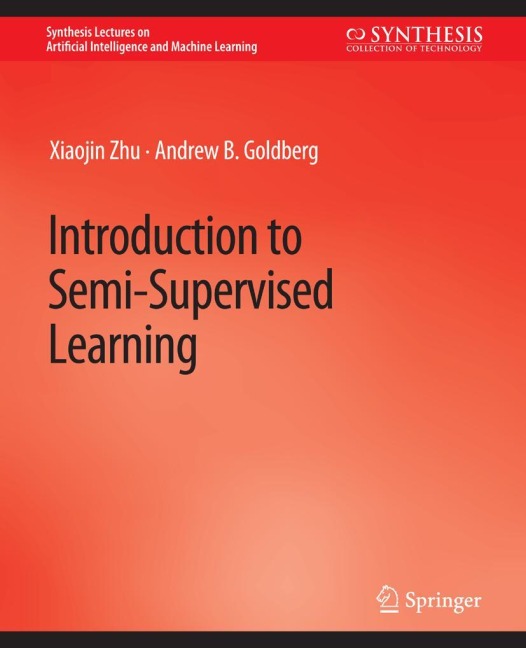
Introduction to Semi-Supervised Learning - Andrew. B Goldberg,Xiaojin Zhu
-40% koodiga BOOKS
Saadetis 12-18 tööpäeva jooksul
30-päevane tagastamisõigus
Semi-supervised learning is a learning paradigm concerned with the study of how computers and natural systems such as humans learn in the presence of both labeled and unlabeled data. Traditionally, learning has been studied either in the unsupervised paradigm (e.g., clustering, outlier detection) where all the data are unlabeled, or in the supervised paradigm (e.g., classification, regression) where all the ... Täielik kirjeldus
Võib-olla meeldib sulle ka
 TOP
TOP
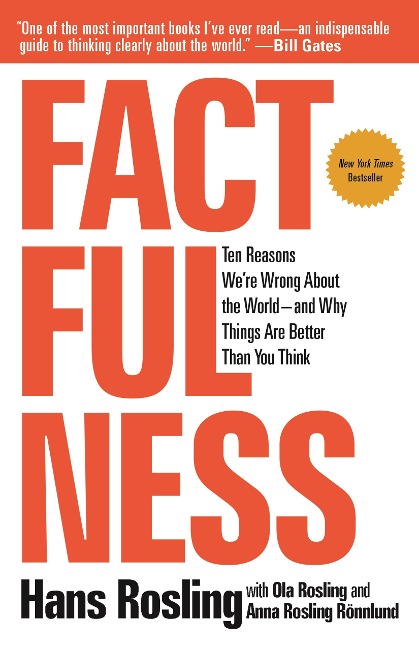
Factfulness: Ten Reasons We're Wrong About the World--and Why Things Are Better Than You Think
Ola Rosling, Anna Rosling Rönnlund, Hans Rosling
-40% koodiga BOOKS
Meie tarnija laos
TOP

Biology: A Global Approach, Global Edition
Neil Campbell, Rebecca Orr, Lisa Urry, Peter Minorsky, Michael Cain, Jane Reece, Steven Wasserman
-40% koodiga BOOKS
Meie tarnija laos
TOP

Six Not-so-easy Pieces: Einstein's Relativity, Symmetry, and Space-Time
Richard P. Feynman, Robert B. Leighton, Matthew Sands
-40% koodiga BOOKS
Meie tarnija laos
TOP

Determined: The Science of Life Without Free Will
-40% koodiga BOOKS
Meie tarnija laos
 TOP
TOP


The Age of Alchemy: How Early Innovators Shaped Modern Chemistry
-40% koodiga BOOKS
Meie tarnija laos
TOP
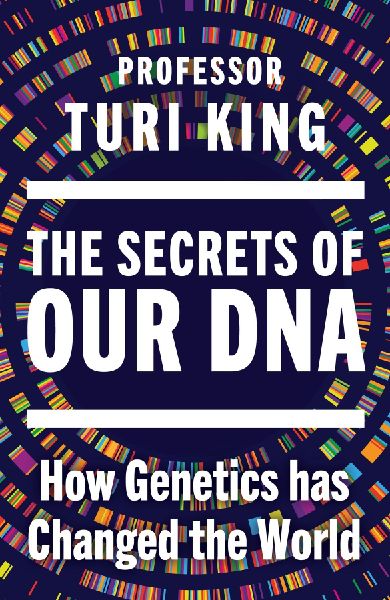
The Secrets of our DNA: How Genetics has Changed the World
-40% koodiga BOOKS
Meie tarnija laos
TOP

Janeway's Immunobiology
Leslie J. Berg, Kenneth Murphy, Casey Weaver
-40% koodiga BOOKS
Meie tarnija laos
TOP

How to Solve it: A New Aspect of Mathematical Method
-40% koodiga BOOKS
Meie tarnija laos
TOP

Why We Sleep: Unlocking the Power of Sleep and Dreams
-40% koodiga BOOKS
Laos
TOP

The Light Eaters: How the Unseen World of Plant Intelligence Offers a New Understanding of Life on Earth
-40% koodiga BOOKS
Meie tarnija laos
TOP

Six Easy Pieces: Essentials of Physics Explained by Its Most Brilliant Teacher
Richard P. Feynman, Robert B. Leighton, Matthew Sands
-40% koodiga BOOKS
Meie tarnija laos
TOP
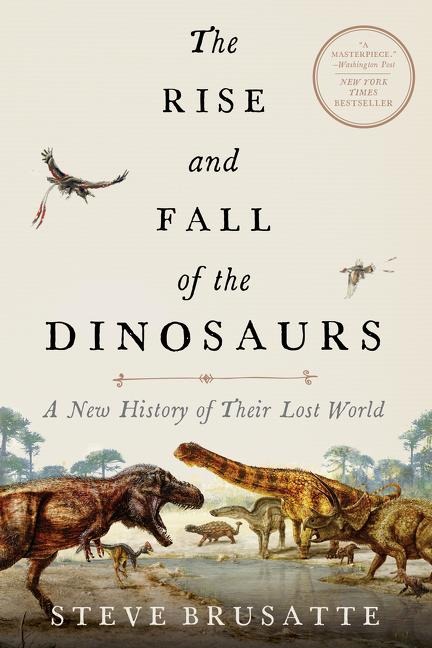
The Rise and Fall of the Dinosaurs: A New History of a Lost World
-40% koodiga BOOKS
Meie tarnija laos
TOP
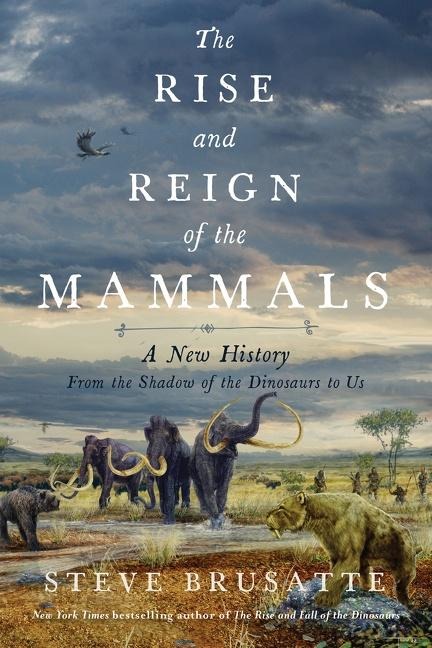
The Rise and Reign of the Mammals: A New History, from the Shadow of the Dinosaurs to Us
-40% koodiga BOOKS
Meie tarnija laos
TOP
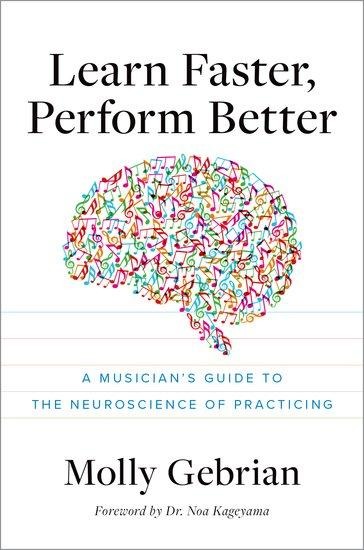
Learn Faster, Perform Better: A Musician's Guide to the Neuroscience of Practicing
-40% koodiga BOOKS
Meie tarnija laos
 TOP
TOP

The Feynman Lectures on Physics. The New Millennium Edition
Matthew Sands, Robert Leighton, Richard Feynman
-40% koodiga BOOKS
Meie tarnija laos
TOP

Thing Explainer: Complicated Stuff in Simple Words
-40% koodiga BOOKS
Meie tarnija laos
TOP
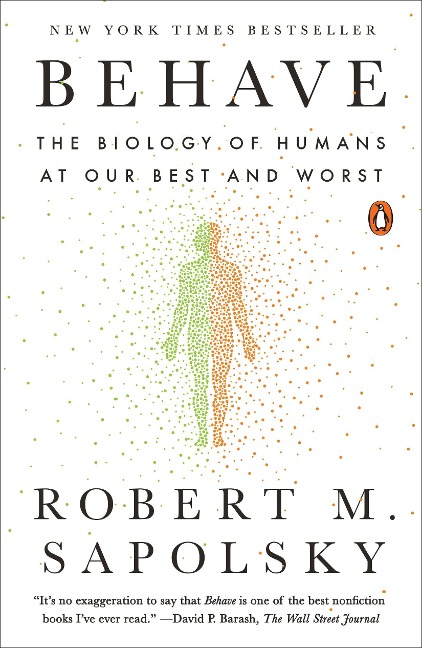
Behave: The Biology of Humans at Our Best and Worst
-40% koodiga BOOKS
Meie tarnija laos
TOP

Introduction to Quantum Mechanics
Darrell F. Schroeter, David J. Griffiths
-40% koodiga BOOKS
Meie tarnija laos
Kirjeldus
Semi-supervised learning is a learning paradigm concerned with the study of how computers and natural systems such as humans learn in the presence of both labeled and unlabeled data. Traditionally, learning has been studied either in the unsupervised paradigm (e.g., clustering, outlier detection) where all the data are unlabeled, or in the supervised paradigm (e.g., classification, regression) where all the data are labeled. The goal of semi-supervised learning is to understand how combining labeled and unlabeled data may change the learning behavior, and design algorithms that take advantage of such a combination. Semi-supervised learning is of great interest in machine learning and data mining because it can use readily available unlabeled data to improve supervised learning tasks when the labeled data are scarce or expensive. Semi-supervised learning also shows potential as a quantitative tool to understand human category learning, where most of the input is self-evidently unlabeled. In this introductory book, we present some popular semi-supervised learning models, including self-training, mixture models, co-training and multiview learning, graph-based methods, and semi-supervised support vector machines. For each model, we discuss its basic mathematical formulation. The success of semi-supervised learning depends critically on some underlying assumptions. We emphasize the assumptions made by each model and give counterexamples when appropriate to demonstrate the limitations of the different models. In addition, we discuss semi-supervised learning for cognitive psychology. Finally, we give a computational learning theoretic perspective on semi-supervised learning, and we conclude the book with a brief discussion of open questions in the field. Table of Contents: Introduction to Statistical Machine Learning / Overview of Semi-Supervised Learning / Mixture Models and EM / Co-Training / Graph-Based Semi-Supervised Learning / Semi-Supervised Support Vector Machines/ Human Semi-Supervised Learning / Theory and Outlook
Lisateave
| Autor | Andrew. B Goldberg, Xiaojin Zhu |
|---|---|
| Kirjastaja | Springer Nature Switzerland |
| Series | Synthesis Lectures on Artificial Intelligence and Machine Learning |
| Väljalaskeaasta | 2009 |
| Kaanetüüp | Pehme kaanega |
| EAN | 9783031004209 |