
Progress in Botany 69 -
-40% koodiga BOOKS
Saadetis 12-18 tööpäeva jooksul
30-päevane tagastamisõigus
With regard to global climate changes, one of our future challenges will be to develop crop plants that cope better with changing environmental conditions. Abiotic stress is estimated to be the primary cause of crop loss worldwide, with the potential to cause a reduction of more than 50% in the average yield of the main crops. Climatic extremes are known to trigger senescence processes. Many different agric ... Täielik kirjeldus
Võib-olla meeldib sulle ka
 TOP
TOP

Determined: The Science of Life Without Free Will
-40% koodiga BOOKS
Meie tarnija laos
 TOP
TOP
The Rise and Fall of the Dinosaurs: A New History of a Lost World
-40% koodiga BOOKS
Meie tarnija laos
TOP

Factfulness: Ten Reasons We're Wrong About the World--and Why Things Are Better Than You Think
Ola Rosling, Anna Rosling Rönnlund, Hans Rosling
-40% koodiga BOOKS
Meie tarnija laos
TOP
Biology: A Global Approach, Global Edition
Neil Campbell, Rebecca Orr, Lisa Urry, Peter Minorsky, Michael Cain, Jane Reece, Steven Wasserman
-40% koodiga BOOKS
Meie tarnija laos
TOP

Six Not-so-easy Pieces: Einstein's Relativity, Symmetry, and Space-Time
Richard P. Feynman, Robert B. Leighton, Matthew Sands
-40% koodiga BOOKS
Meie tarnija laos
TOP
Entangled Life: How Fungi Make Our Worlds, Change Our Minds and Shape Our Futures
-40% koodiga BOOKS
Meie tarnija laos
TOP
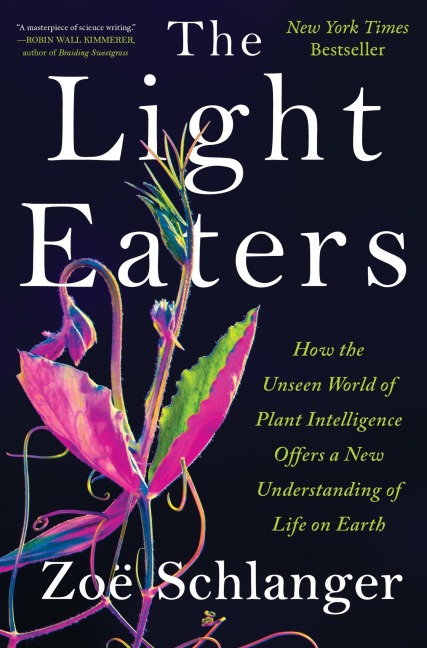
The Light Eaters: How the Unseen World of Plant Intelligence Offers a New Understanding of Life on Earth
-40% koodiga BOOKS
Meie tarnija laos
TOP

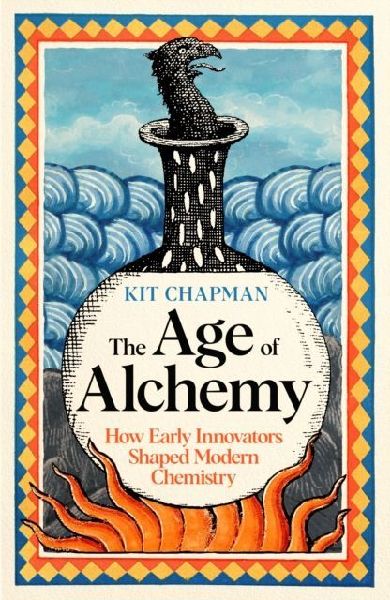
The Age of Alchemy: How Early Innovators Shaped Modern Chemistry
-40% koodiga BOOKS
Meie tarnija laos
TOP
The Secrets of our DNA: How Genetics has Changed the World
-40% koodiga BOOKS
Meie tarnija laos
TOP

Janeway's Immunobiology
Leslie J. Berg, Kenneth Murphy, Casey Weaver
-40% koodiga BOOKS
Meie tarnija laos
TOP
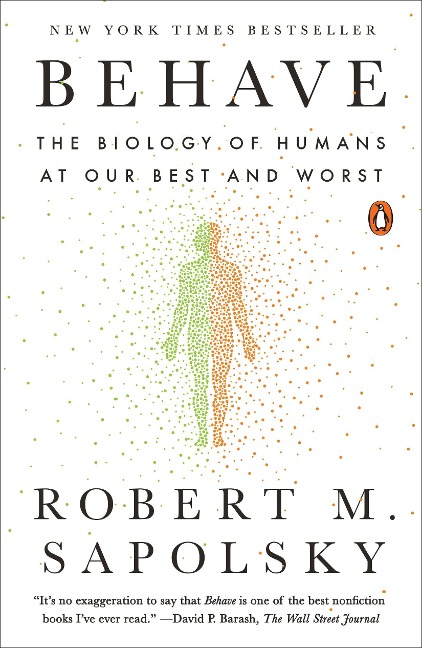
Behave: The Biology of Humans at Our Best and Worst
-40% koodiga BOOKS
Meie tarnija laos
TOP
Why We Sleep: Unlocking the Power of Sleep and Dreams
-40% koodiga BOOKS
Laos
TOP
Why Machines Learn: The Elegant Maths Behind Modern AI
-40% koodiga BOOKS
Meie tarnija laos
TOP

Life As No One Knows It: The Physics of Life's Emergence
-40% koodiga BOOKS
Meie tarnija laos
TOP
The Rise and Reign of the Mammals: A New History, from the Shadow of the Dinosaurs to Us
-40% koodiga BOOKS
Meie tarnija laos
TOP

Learn Faster, Perform Better: A Musician's Guide to the Neuroscience of Practicing
-40% koodiga BOOKS
Meie tarnija laos
TOP
The Brain That Changes Itself: Stories of Personal Triumph from the Frontiers of Brain Science
-40% koodiga BOOKS
Meie tarnija laos
 TOP
TOP

How to Solve it: A New Aspect of Mathematical Method
-40% koodiga BOOKS
Meie tarnija laos
Kirjeldus
With regard to global climate changes, one of our future challenges will be to develop crop plants that cope better with changing environmental conditions. Abiotic stress is estimated to be the primary cause of crop loss worldwide, with the potential to cause a reduction of more than 50% in the average yield of the main crops. Climatic extremes are known to trigger senescence processes. Many different agriculturally important traits are affected by senescence, like number and quality of seeds, timing of seed set, fruit ripening, etc. . Despite the importance of the sen- cence processes, our knowledge on the regulatory mechanisms of senescence is still poor. However, senescence is not a chaotic breakdown, but an orderly loss of normal cell functions. In contrast to aging processes which have a passive and non-regulated degenerative character (for a review, see Krupinska et al. 2003), senescence is an active and highly regulated process. Senescence can be initiated by exogenous and endogenous triggers. The most important endogenous factors inducing senescence are the age of the leaves and the age and developmental stage of the plant. The leaves of annual plants show a continuous decrease in their photosynthesis rate after full expansion (Batt and Woolhause 1975; Hensel et al. 1993). In fast-aging plants like Arabidopsis, photosynthetic capacity of the leaves decreases by 50% within 4¿6 days of full leaf expansion under continuous light conditions (Hensel et al. 1993).
Lisateave
| Kirjastaja | Springer Berlin Heidelberg |
|---|---|
| Series | Progress in Botany |
| Väljalaskeaasta | 2010 |
| Kaanetüüp | Pehme kaanega |
| EAN | 9783642092046 |