
Reflectance Spectroscopy: Principles, Methods, Applications - Gustav Kortüm
-40% koodiga BOOKS
Saadetis 12-18 tööpäeva jooksul
30-päevane tagastamisõigus
Reflectance spectroscopy is the investigation of the spectral composi tion of surface-reflected radiation with respect to its angularly dependent intensity and the composition of the incident primary radiation. Two limiting cases are important: The first concerns regular (specular) reflection from a smooth surface, and the second diffuse reflection from an ideal matte surface. All possible variations are f ... Täielik kirjeldus
Võib-olla meeldib sulle ka
 TOP
TOP

Determined: The Science of Life Without Free Will
-40% koodiga BOOKS
Meie tarnija laos
 TOP
TOP

The Rise and Fall of the Dinosaurs: A New History of a Lost World
-40% koodiga BOOKS
Meie tarnija laos
TOP

Factfulness: Ten Reasons We're Wrong About the World--and Why Things Are Better Than You Think
Ola Rosling, Anna Rosling Rönnlund, Hans Rosling
-40% koodiga BOOKS
Meie tarnija laos
TOP

Biology: A Global Approach, Global Edition
Neil Campbell, Rebecca Orr, Lisa Urry, Peter Minorsky, Michael Cain, Jane Reece, Steven Wasserman
-40% koodiga BOOKS
Meie tarnija laos
TOP

Six Not-so-easy Pieces: Einstein's Relativity, Symmetry, and Space-Time
Richard P. Feynman, Robert B. Leighton, Matthew Sands
-40% koodiga BOOKS
Meie tarnija laos
TOP

Entangled Life: How Fungi Make Our Worlds, Change Our Minds and Shape Our Futures
-40% koodiga BOOKS
Meie tarnija laos
TOP

The Light Eaters: How the Unseen World of Plant Intelligence Offers a New Understanding of Life on Earth
-40% koodiga BOOKS
Meie tarnija laos
TOP

The Age of Alchemy: How Early Innovators Shaped Modern Chemistry
-40% koodiga BOOKS
Meie tarnija laos
TOP

The Secrets of our DNA: How Genetics has Changed the World
-40% koodiga BOOKS
Meie tarnija laos
TOP

Janeway's Immunobiology
Leslie J. Berg, Kenneth Murphy, Casey Weaver
-40% koodiga BOOKS
Meie tarnija laos
TOP
Behave: The Biology of Humans at Our Best and Worst
-40% koodiga BOOKS
Meie tarnija laos
TOP
Why We Sleep: Unlocking the Power of Sleep and Dreams
-40% koodiga BOOKS
Laos
TOP
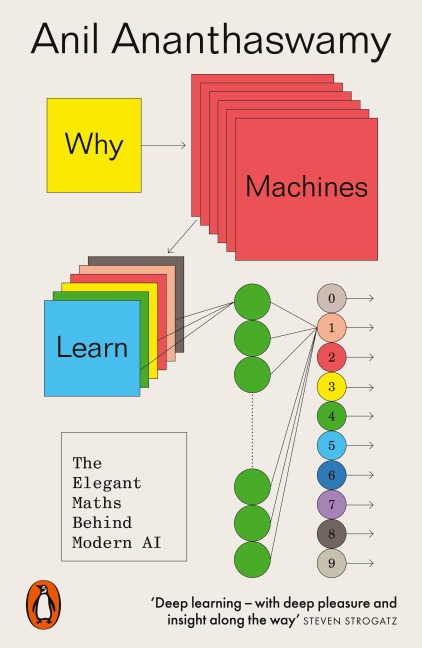
Why Machines Learn: The Elegant Maths Behind Modern AI
-40% koodiga BOOKS
Meie tarnija laos
TOP

Life As No One Knows It: The Physics of Life's Emergence
-40% koodiga BOOKS
Meie tarnija laos
TOP

The Rise and Reign of the Mammals: A New History, from the Shadow of the Dinosaurs to Us
-40% koodiga BOOKS
Meie tarnija laos
TOP
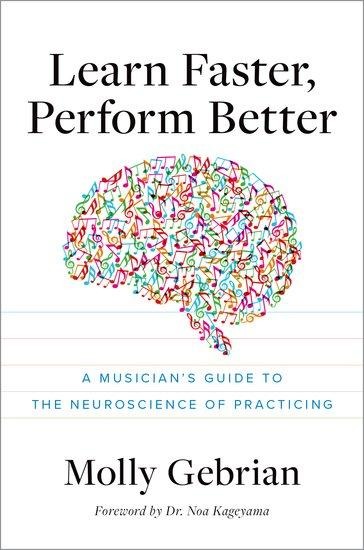
Learn Faster, Perform Better: A Musician's Guide to the Neuroscience of Practicing
-40% koodiga BOOKS
Meie tarnija laos
TOP
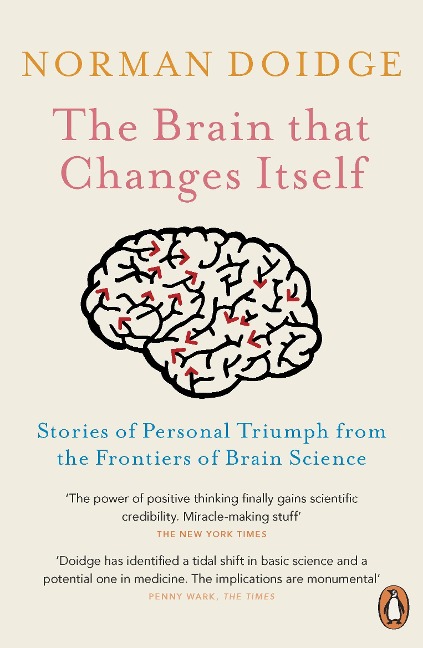
The Brain That Changes Itself: Stories of Personal Triumph from the Frontiers of Brain Science
-40% koodiga BOOKS
Meie tarnija laos
 TOP
TOP

How to Solve it: A New Aspect of Mathematical Method
-40% koodiga BOOKS
Meie tarnija laos
Kirjeldus
Reflectance spectroscopy is the investigation of the spectral composi tion of surface-reflected radiation with respect to its angularly dependent intensity and the composition of the incident primary radiation. Two limiting cases are important: The first concerns regular (specular) reflection from a smooth surface, and the second diffuse reflection from an ideal matte surface. All possible variations are found in practice between these two extremes. For the two extreme cases, two fundamentally different methods of reflectance spectroscopy are employed: The first of these consists in evaluating the optical constants n (refractive index) and x (absorption index) from the measured regular reflection by means of the Fresnel equations as a function of the wave A. This rather old and very troublesome procedure, which is length incapable of very accurate results, has recently been modified by Fahren fort by replacing the air-sample phase boundary by the phase boundary between a dielectric of higher refractive index (n ) and the sample (n ). 1 2 If the sample absorbs no radiation and the angle of incidence exceeds a certain definite value, total reflection occurs. On close optical contact between the two phases, a small amount of energy is transferred into the less dense phase because of diffraction phenomena at the edges of the incident beam. The energy flux in the two directions through the phase boundary caused by this is equal, however, so that 'total reflection takes place.
Lisateave
| Autor | Gustav Kortüm |
|---|---|
| Kirjastaja | Springer Berlin Heidelberg |
| Väljalaskeaasta | 2012 |
| Kaanetüüp | Pehme kaanega |
| EAN | 9783642880735 |