
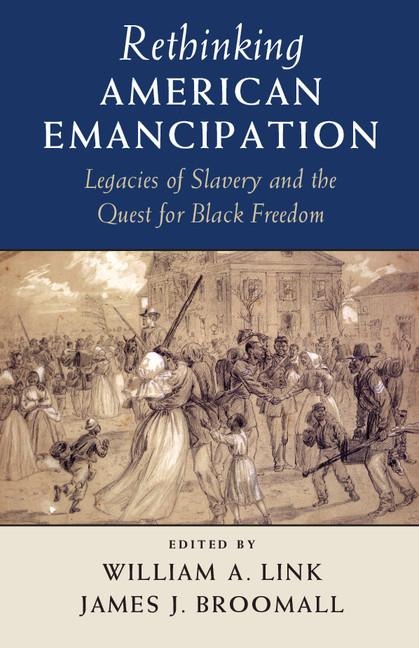
Rethinking American Emancipation -
-40% koodiga BOOKS
Saadetis 17-23 tööpäeva jooksul
30-päevane tagastamisõigus
On January 1, 1863, Abraham Lincoln announced the Emancipation Proclamation, an event that soon became a bold statement of presidential power, a dramatic shift in the rationale for fighting the Civil War, and a promise of future freedom for four million enslaved Americans. But the document marked only a beginning; freedom's future was anything but certain. Thereafter, the significance of both the Proclamati ... Täielik kirjeldus
Võib-olla meeldib sulle ka
 TOP
TOP

An African History of Africa: From the Dawn of Humanity to Independence
-40% koodiga BOOKS
Meie tarnija laos
 TOP
TOP

A History of the World in 47 Borders: The Stories Behind the Lines on Our Maps
-40% koodiga BOOKS
Meie tarnija laos
TOP

All We Say: A History of the United States in Fifteen Speeches
-40% koodiga BOOKS
Meie tarnija laos
TOP

America, América: A New History of the New World
-40% koodiga BOOKS
Lõppenud
 TOP
TOP

A People's History of the United States
-40% koodiga BOOKS
Meie tarnija laos
 TOP
TOP
From Third World to First: Singapore and the Asian Economic Boom
-40% koodiga BOOKS
Meie tarnija laos
TOP

Man's Search For Meaning: The classic tribute to hope from the Holocaust
-40% koodiga BOOKS
Meie tarnija laos
TOP

Bloodlands: Europe Between Hitler and Stalin
-40% koodiga BOOKS
Meie tarnija laos
TOP

The Notebook: A History of Thinking on Paper
-40% koodiga BOOKS
Meie tarnija laos
TOP

We the People: A History of the U.S. Constitution
-40% koodiga BOOKS
Meie tarnija laos
TOP

Chip War: The Fight for the World's Most Critical Technology
-40% koodiga BOOKS
Laos
TOP

A Short History of America: From Tea Party to Trump
-40% koodiga BOOKS
Meie tarnija laos
 TOP
TOP

Man's Search For Meaning: The classic tribute to hope from the Holocaust
-40% koodiga BOOKS
Meie tarnija laos
TOP
The Sleepwalkers: How Europe Went to War in 1914
-40% koodiga BOOKS
Meie tarnija laos
TOP

The Hundred Years' War on Palestine: A History of Settler Colonial Conquest and Resistance
-40% koodiga BOOKS
Meie tarnija laos
TOP

Eichmann in Jerusalem: A Report on the Banality of Evil
-40% koodiga BOOKS
Meie tarnija laos
Kirjeldus
On January 1, 1863, Abraham Lincoln announced the Emancipation Proclamation, an event that soon became a bold statement of presidential power, a dramatic shift in the rationale for fighting the Civil War, and a promise of future freedom for four million enslaved Americans. But the document marked only a beginning; freedom's future was anything but certain. Thereafter, the significance of both the Proclamation and of emancipation assumed new and diverse meanings, as African Americans explored freedom and the nation attempted to rebuild itself. Despite the sweeping power of Lincoln's Proclamation, struggle, rather than freedom, defined emancipation's broader legacy. The nine essays in this volume unpack the long history and varied meanings of the emancipation of American slaves. Together, the contributions argue that 1863 did not mark an end point or a mission accomplished in black freedom; rather, it initiated the beginning of an ongoing, contested process.
Lisateave
| Kirjastaja | Cambridge University Press |
|---|---|
| Väljalaskeaasta | 2016 |
| Kaanetüüp | Kõvakaaneline |
| EAN | 9781107073036 |