
Self Ligating Brackets - Sreevatsan Raghavan,Puneet Batra,Sonal Attri
-30% koodiga BOOKS
Saadetis 12-18 tööpäeva jooksul
30-päevane tagastamisõigus
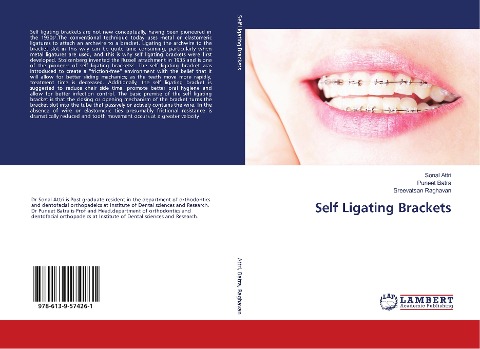
Self ligating brackets are not new conceptually, having been pioneered in the 1930s¹.The conventional technique today uses metal or elastomeric ligatures to attach an archwire to a bracket. Ligating the archwire to the bracket slot in this way can be quite time consuming, particularly when metal ligatures are used, and this is why self ligating brackets were first developed. Stolzenberg invented the Russell ... Täielik kirjeldus
Võib-olla meeldib sulle ka
 TOP
TOP

The Myth of Normal: Trauma, Illness, and Healing in a Toxic Culture
-30% koodiga BOOKS
Laos
TOP

No Bad Parts: Healing Trauma and Restoring Wholeness with the Internal Family Systems Model
-30% koodiga BOOKS
Meie tarnija laos
TOP

Maybe You Should Talk to Someone: a therapist, her thearapist, and our lives revealed
-30% koodiga BOOKS
Meie tarnija laos
 TOP
TOP

Aids to the Examination of the Peripheral Nervous System
-30% koodiga BOOKS
Meie tarnija laos
TOP

Harrison's Principles of Internal Medicine (Vol.1 & Vol.2)
Stephen Hauser, Joseph Loscalzo, Steven Holland, Dan Longo, J. Larry Jameson, Dennis Kasper, Carol Langford, Anthony Fauci
-30% koodiga BOOKS
Meie tarnija laos
TOP

The Body Keeps the Score: Brain, Mind, and Body in the Healing of Trauma
-30% koodiga BOOKS
Meie tarnija laos
 TOP
TOP

The Checklist Manifesto: How to Get Things Right
-30% koodiga BOOKS
Meie tarnija laos
TOP

How Not To Die: Discover the foods scientifically proven to prevent and reverse disease
-30% koodiga BOOKS
Meie tarnija laos
TOP

Lifespan: Why We Age - and Why We Don't Have To
-30% koodiga BOOKS
Meie tarnija laos
TOP

Vademecum Metabolicum: Diagnosis and Treatment of Inborn Errors of Metabolism Forword by William L. Nyhan, San Diego, USA
Johannes Zschocke, Georg F. Hoffmann
-30% koodiga BOOKS
Meie tarnija laos
TOP

ROAR: How to Match Your Food and Fitness to Your Unique Female Physiology for Optimum Performance, Great Health, and a Strong, Lean Body for Life
-30% koodiga BOOKS
Meie tarnija laos
TOP

Cellular and Molecular Immunology
Sarah Henrickson, Abul K. Abbas, Andrew H. Lichtman, Shiv Pillai
-30% koodiga BOOKS
Meie tarnija laos
TOP

The Autistic Burnout Workbook: Your Guide to Your Personal Recovery Plan
-30% koodiga BOOKS
Meie tarnija laos
TOP

McGee's Evidence-Based Physical Diagnosis
-30% koodiga BOOKS
Meie tarnija laos
TOP

Physics, Pharmacology and Physiology for Anaesthetists: Key Concepts for the FRCA
Matthew E. Cross, Emma V. E. Plunkett
-30% koodiga BOOKS
Meie tarnija laos
TOP
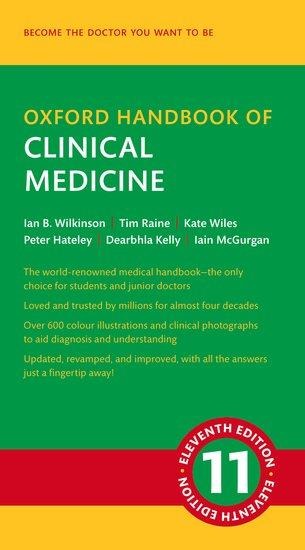
Oxford Handbook of Clinical Medicine
Peter Hateley, Iain McGurgan, Ian B. Wilkinson, Tim Raine, Dearbhla Kelly, Kate Wiles
-30% koodiga BOOKS
Meie tarnija laos
TOP
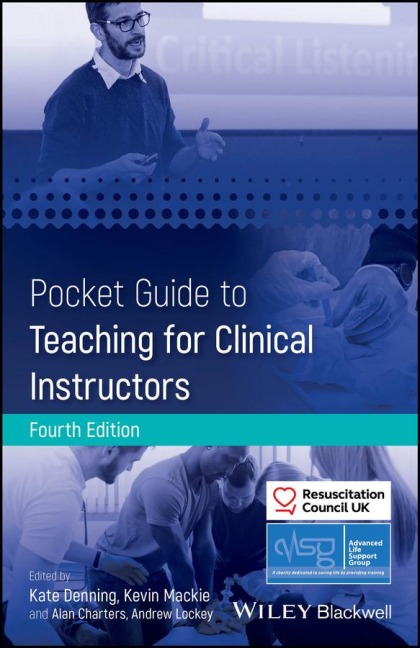
Pocket Guide to Teaching for Clinical Instructors
-30% koodiga BOOKS
Meie tarnija laos
TOP

Oxford Handbook of Critical Care
Andrew Webb, Mervyn Singer, Alice Carter
-30% koodiga BOOKS
Meie tarnija laos
Kirjeldus
Self ligating brackets are not new conceptually, having been pioneered in the 1930s¹.The conventional technique today uses metal or elastomeric ligatures to attach an archwire to a bracket. Ligating the archwire to the bracket slot in this way can be quite time consuming, particularly when metal ligatures are used, and this is why self ligating brackets were first developed. Stolzenberg invented the Russell attachment in 1935 and is one of the pioneers of self ligating brackets². The self ligating bracket was introduced to create a ¿friction-free¿ environment with the belief that it will allow for better sliding mechanics; as the teeth move more rapidly, treatment time is decreased. Additionally, the self ligating bracket is suggested to reduce chair side time, promote better oral hygiene and allow for better infection control. The basic premise of the self ligating bracket is that the closing or opening mechanism of the bracket turns the bracket slot into the tube that passively or actively contains the wire. In the absence of wire or elastomeric ties presumably frictional resistance is dramatically reduced and tooth movement occurs at a greater velocity
Lisateave
| Autor | Sreevatsan Raghavan, Puneet Batra, Sonal Attri |
|---|---|
| Kirjastaja | LAP LAMBERT Academic Publishing |
| Väljalaskeaasta | 2018 |
| Kaanetüüp | Pehme kaanega |
| EAN | 9786139574261 |