
Solution of Crack Problems: The Distributed Dislocation Technique - A. M. Korsunsky,D. N. Dai,P. A. Kelly,D. A. Hills

-40% koodiga BOOKS
Saadetis 17-23 tööpäeva jooksul
30-päevane tagastamisõigus
This book is concerned with the numerical solution of crack problems. The techniques to be developed are particularly appropriate when cracks are relatively short, and are growing in the neighbourhood of some stress raising feature, causing a relatively steep stress gradient. It is therefore practicable to represent the geometry in an idealised way, so that a precise solution may be obtained. This contrasts ... Täielik kirjeldus
Võib-olla meeldib sulle ka
 TOP
TOP

Determined: The Science of Life Without Free Will
-40% koodiga BOOKS
Meie tarnija laos
TOP
The Rise and Fall of the Dinosaurs: A New History of a Lost World
-40% koodiga BOOKS
Meie tarnija laos
TOP

Factfulness: Ten Reasons We're Wrong About the World--and Why Things Are Better Than You Think
Ola Rosling, Anna Rosling Rönnlund, Hans Rosling
-40% koodiga BOOKS
Meie tarnija laos
TOP

Biology: A Global Approach, Global Edition
Neil Campbell, Rebecca Orr, Lisa Urry, Peter Minorsky, Michael Cain, Jane Reece, Steven Wasserman
-40% koodiga BOOKS
Meie tarnija laos
TOP

Six Not-so-easy Pieces: Einstein's Relativity, Symmetry, and Space-Time
Richard P. Feynman, Robert B. Leighton, Matthew Sands
-40% koodiga BOOKS
Meie tarnija laos
TOP

The Light Eaters: How the Unseen World of Plant Intelligence Offers a New Understanding of Life on Earth
-40% koodiga BOOKS
Meie tarnija laos
 TOP
TOP

The Age of Alchemy: How Early Innovators Shaped Modern Chemistry
-40% koodiga BOOKS
Meie tarnija laos
TOP

The Secrets of our DNA: How Genetics has Changed the World
-40% koodiga BOOKS
Meie tarnija laos
TOP

Janeway's Immunobiology
Leslie J. Berg, Kenneth Murphy, Casey Weaver
-40% koodiga BOOKS
Meie tarnija laos
TOP

How to Solve it: A New Aspect of Mathematical Method
-40% koodiga BOOKS
Meie tarnija laos
TOP
Behave: The Biology of Humans at Our Best and Worst
-40% koodiga BOOKS
Meie tarnija laos
TOP

Why We Sleep: Unlocking the Power of Sleep and Dreams
-40% koodiga BOOKS
Laos
TOP
Why Machines Learn: The Elegant Maths Behind Modern AI
-40% koodiga BOOKS
Meie tarnija laos
TOP

Six Easy Pieces: Essentials of Physics Explained by Its Most Brilliant Teacher
Richard P. Feynman, Robert B. Leighton, Matthew Sands
-40% koodiga BOOKS
Meie tarnija laos
TOP
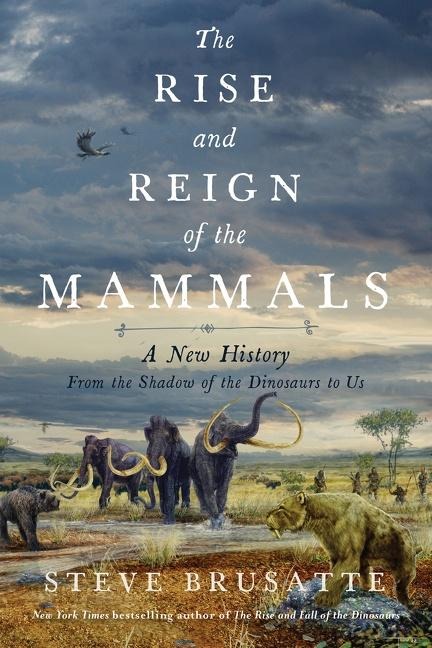
The Rise and Reign of the Mammals: A New History, from the Shadow of the Dinosaurs to Us
-40% koodiga BOOKS
Meie tarnija laos
TOP
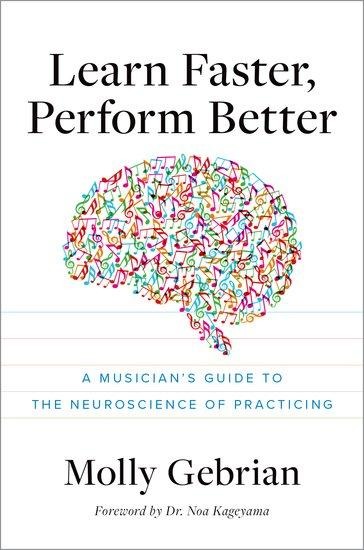
Learn Faster, Perform Better: A Musician's Guide to the Neuroscience of Practicing
-40% koodiga BOOKS
Meie tarnija laos
TOP
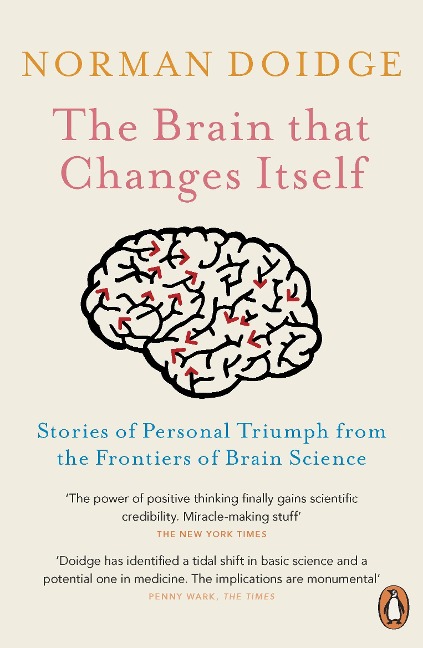
The Brain That Changes Itself: Stories of Personal Triumph from the Frontiers of Brain Science
-40% koodiga BOOKS
Meie tarnija laos
 TOP
TOP

Thing Explainer: Complicated Stuff in Simple Words
-40% koodiga BOOKS
Meie tarnija laos
Kirjeldus
This book is concerned with the numerical solution of crack problems. The techniques to be developed are particularly appropriate when cracks are relatively short, and are growing in the neighbourhood of some stress raising feature, causing a relatively steep stress gradient. It is therefore practicable to represent the geometry in an idealised way, so that a precise solution may be obtained. This contrasts with, say, the finite element method in which the geometry is modelled exactly, but the subsequent solution is approximate, and computationally more taxing. The family of techniques presented in this book, based loosely on the pioneering work of Eshelby in the late 1950's, and developed by Erdogan, Keer, Mura and many others cited in the text, present an attractive alternative. The basic idea is to use the superposition of the stress field present in the unfiawed body, together with an unknown distribution of 'strain nuclei' (in this book, the strain nucleus employed is the dislocation), chosen so that the crack faces become traction-free. The solution used for the stress field for the nucleus is chosen so that other boundary conditions are satisfied. The technique is therefore efficient, and may be used to model the evolution of a developing crack in two or three dimensions. Solution techniques are described in some detail, and the book should be readily accessible to most engineers, whilst preserving the rigour demanded by the researcher who wishes to develop the method itself.
Lisateave
| Autor | A. M. Korsunsky, D. N. Dai, P. A. Kelly, D. A. Hills |
|---|---|
| Kirjastaja | Springer Netherlands |
| Series | Solid Mechanics and Its Applications |
| Väljalaskeaasta | 1996 |
| Kaanetüüp | Kõvakaaneline |
| EAN | 9780792338482 |