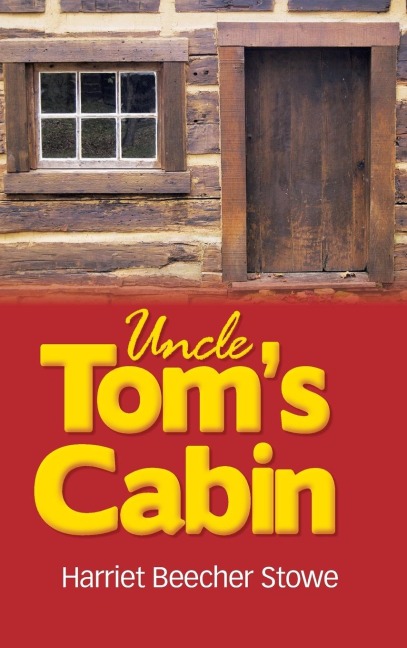
Product Description Originally published in 1878. This volume from the Cornell University Library's print collections was scanned on an APT BookScan and converted to JPG 2000 format by Kirtas Technologies. All titles scanned cover to cover and pages may include marks notations and other marginalia present in the original volume. Review Uncle Tom s Cabin is the most powerful and enduring work of art ever written about American slavery. --Alfred Kazin, American writer and award-winning literary criticUpon meeting Stowe, Abraham Lincoln allegedly remarked, 'So this is the little lady who started this new great war!' --.One of the greatest productions of the human mind. --Tolstoy From AudioFile Using a mixture of clearly distinguished voices, Ricco Ross brings Southern accents, Negro dialects, and another era to life in this rendering of UNCLE TOM'S CABIN. Listeners can almost see the young Negro quadroons, Jim Crow, and Topsy, who says, "I just growed," when asked when and where she was born. While Ricco portrays the ugly slave master, Simon Legree, with menacing tones of cruelty, he switches to sounds of compassion and grace with Uncle Tom. Ricco depicts the barbarisms of slave trading in which men, women, and children are bought and sold like livestock with chilling reality. This timeless classic is worth revisiting. G.D.W. © AudioFile 2001, Portland, Maine--Copyright © AudioFile, Portland, Maine From the Publisher Library of Liberal Arts title. From the Inside Flap Uncle Tom, Topsy, Sambo, Simon Legree, little Eva: their names are American bywords, and all of them are characters in Harriet Beecher Stowe's remarkable novel of the pre-Civil War South.Uncle Tom's Cabin was revolutionary in 1852 for its passionate indictment of slavery and for its presentation of Tom, "a man of humanity," as the first black hero in American fiction. Labeled racist and condescending by some contemporary critics, it remains a shocking, controversial, and powerful work -- exposing the attitudes of white nineteenth-century society toward "the peculiar institution" and documenting, in heartrending detail, the tragic breakup of black Kentucky families "sold down the river." An immediate international sensation,Uncle Tom's Cabin sold 300,000 copies in the first year, was translated into thirty-seven languages, and has never gone out of print: its political impact was immense, its emotional influence immeasurable.From the Paperback edition. From the Back Cover With its extraordinary capacity to move its readers, 'Uncle Tom's Cabin' evoked a surge of indignation that contributed crucially to the abolition of slavery in America. About the Author HARRIET BEECHER STOWE (1811 1896) was born in Litchfield, Connecticut, the daughter of Lyman Beecher, an outspoken religious leader, who raised her on devotional tales of Christian charity and brotherhood. When her father moved the family to Cincinnati and became head of the Lane Theological Seminary, she had her first exposure to slavery and abolitionism, witnessing race riots, hearing the stories of runaway slaves, and aiding fugitive slaves from the South. Excerpt. © Reprinted by permission. All rights reserved. From Amanda Claybaugh's Introduction to Uncle Tom's CabinThe publication of Uncle Tom's Cabin lifted Stowe out of a purely Beecher orbit and put her in the stratosphere of international fame. But the novel is nonetheless indebted, as Joan D. Hedrick shows in her Harriet Beecher Stowe: A Life (1994), to the many and varied Beecher family projects. The father's battle for the soul of the nation, the brothers' Christian ministries, one sister's advocacy for women and slaves, another's celebration of the properly run home-all of these can be found in Uncle Tom alongside Stowe's own gifts: her ear for dialect and her eye for detail, her masterful handling of suspense and pathos, and her sympathetic embrace o



 TOP
TOP